A new spinning device which turns a fly into a spinner
by John Gray
Like many salmon
and sea trout
fishermen,
I derive most pleasure from fishing the fly. In low water or on a
falling spate, the fly is
not only the most pleasant method of fishing but often
the most effective, too.
There are times, of course, especially when the river
is running high, cold and coloured, when the skilled spin fisherman, fishing a
lure on a spinning rod, may outfish even the
 most accomplished fly fisherman.
Even at such times, though, many of us will choose to persevere with the fly
rod, even if the chance of a fish may be missed. To many, this behaviour may
seem somewhat perverse and not entirely rational. Perhaps so. For my own part,
it is not that I have any kind of moral or ethical objection to spinning, nor do
I think that fly fishing is inherently superior in any way. Indeed, if the
object is to catch the maximum number of fish in the most efficient manner, then
the spinner might often be the logical
choice. I simply enjoy fly fishing more than spinning and will now rarely resort
to the spinning rod. The whole business seems rather mechanical, particularly
the repetitive winding in of fifty yards of line on every cast, on which point
it is worth noting that, in the course of a day's fishing, the fly fisher's lure
is in the water and fishing for a much longer time than the spinner's lure. most accomplished fly fisherman.
Even at such times, though, many of us will choose to persevere with the fly
rod, even if the chance of a fish may be missed. To many, this behaviour may
seem somewhat perverse and not entirely rational. Perhaps so. For my own part,
it is not that I have any kind of moral or ethical objection to spinning, nor do
I think that fly fishing is inherently superior in any way. Indeed, if the
object is to catch the maximum number of fish in the most efficient manner, then
the spinner might often be the logical
choice. I simply enjoy fly fishing more than spinning and will now rarely resort
to the spinning rod. The whole business seems rather mechanical, particularly
the repetitive winding in of fifty yards of line on every cast, on which point
it is worth noting that, in the course of a day's fishing, the fly fisher's lure
is in the water and fishing for a much longer time than the spinner's lure.
Now I do not deny the considerable
knowledge and skill required for consistent success in spinning. Moreover, as a
fly fisherman, I have often wished that I could impart some of the mobility and
life of the spinning lure to my flies, which at times appear rather lifeless in
comparison to a Rapala, a Toby, a Flying C or a Mepps Spoon. The skilled fly
dresser can, of course, through his wise choice and use of materials, imbue in
his creations a translucence, flash and mobility which salmon may at times find
irresistible. But such mobility generally relies on the action of the river
currents on the fly itself and on its component fibres of hair and hackle. How
much more attractive might a fly be if it had some inherent easy movement, an
apparent life of its own? Might it be possible to design a fly which would
dive and wobble like a plug, flutter like a Toby or spin like a Mepps spoon?
Over the years many innovative fly
fishers, following this line of thought, have experimented with all kinds of
devices in an effort to give life to their flies: things such as coneheads,
diving vanes, propeller blades, wiggly rubber tails and so on. In recent years,
following the undoubted success of the Mepps Spoon and Flying C, some have
successfully incorporated spinning blades into fishing lures small enough and light
enough to be cast on a fly rod, various fly spoons for example. 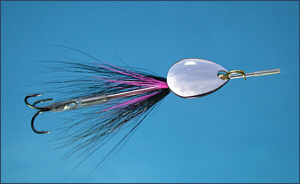 After experimenting with a variety of fly attachments and devices aimed at
imparting additional movement to my flies, some of which showed considerable
promise, it was the spinning blade which seemed to me to afford the greatest
scope for success. What I was aiming for was not so much a stand-alone fishing
lure or fly spoon but an attachment which could be added to a conventional
salmon fly, when conditions might otherwise dictate the use of a spinner; a
device, a kind of mini-spinner, which might be small and light enough to attach
to the head of a fly and which might be cast, without too much difficulty, on a
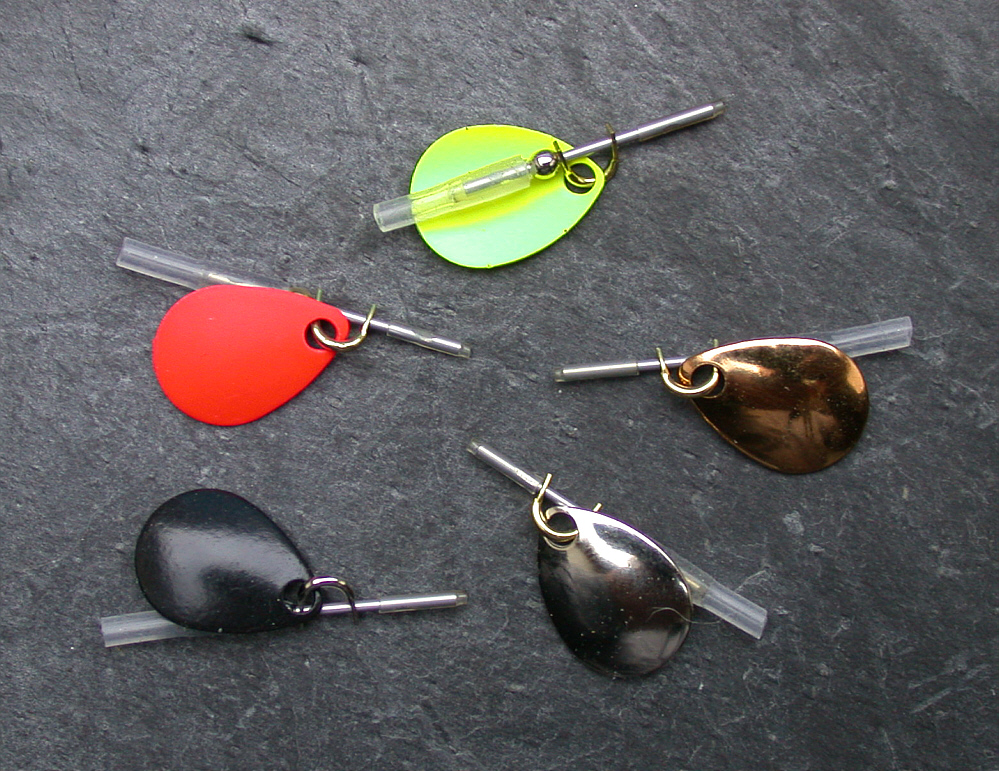
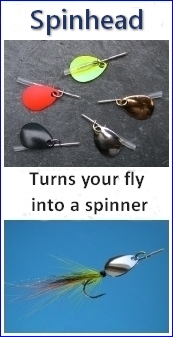
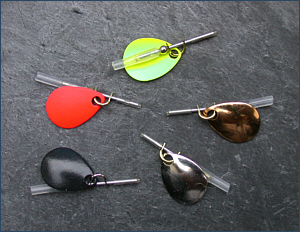
salmon fly rod. What I ended up with was a very light and most versatile device
which can be attached to the front of a conventional fly, tube fly, needle fly
or Waddington lure; it can be fished in place of a fly, rather like a spinning
tube fly, with a detachable single, double or treble hook, which may be dressed
to create added attraction; it can be fished, with or without additional weight,
on a light spinning rod, as a fishing lure for almost any predatory species e.g.
salmon, sea trout, brown trout, rainbow trout, steelhead, perch, pike, bass
etc.; it can be fished singly or in tandem with others to create a longer,
heavier lure; it can be produced in a variety of colours and sizes. I called it,
rather unimaginatively, the Spinhead. One might say it is revolutionary!
After experimenting with a variety of fly attachments and devices aimed at
imparting additional movement to my flies, some of which showed considerable
promise, it was the spinning blade which seemed to me to afford the greatest
scope for success. What I was aiming for was not so much a stand-alone fishing
lure or fly spoon but an attachment which could be added to a conventional
salmon fly, when conditions might otherwise dictate the use of a spinner; a
device, a kind of mini-spinner, which might be small and light enough to attach
to the head of a fly and which might be cast, without too much difficulty, on a
salmon fly rod. What I ended up with was a very light and most versatile device
which can be attached to the front of a conventional fly, tube fly, needle fly
or Waddington lure; it can be fished in place of a fly, rather like a spinning
tube fly, with a detachable single, double or treble hook, which may be dressed
to create added attraction; it can be fished, with or without additional weight,
on a light spinning rod, as a fishing lure for almost any predatory species e.g.
salmon, sea trout, brown trout, rainbow trout, steelhead, perch, pike, bass
etc.; it can be fished singly or in tandem with others to create a longer,
heavier lure; it can be produced in a variety of colours and sizes. I called it,
rather unimaginatively, the Spinhead. One might say it is revolutionary!
Ways to use a Spinhead
click images to enlarge
|
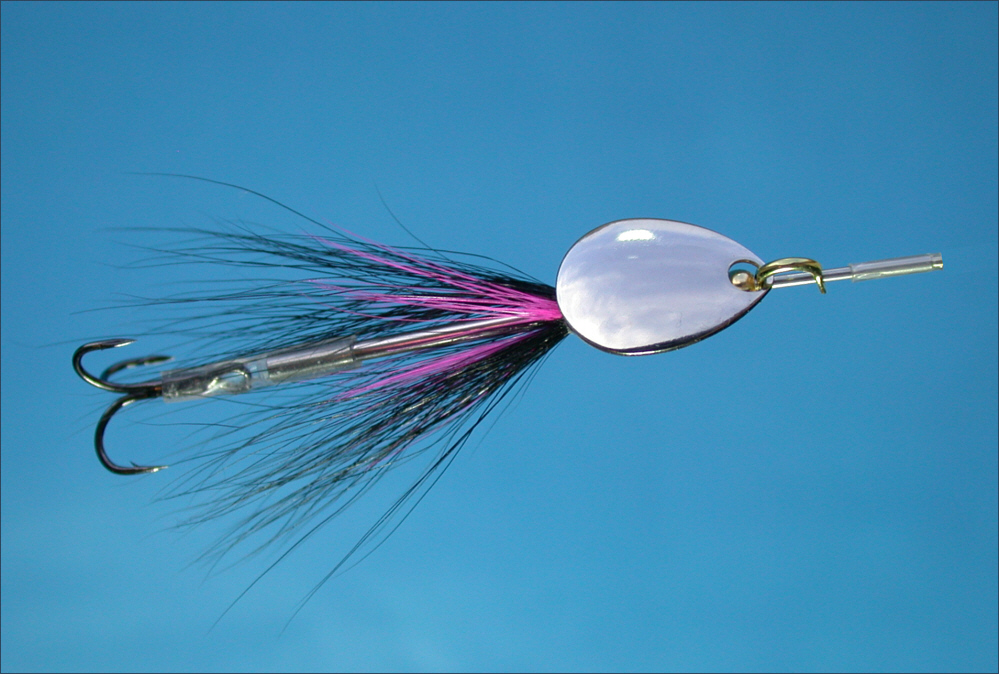
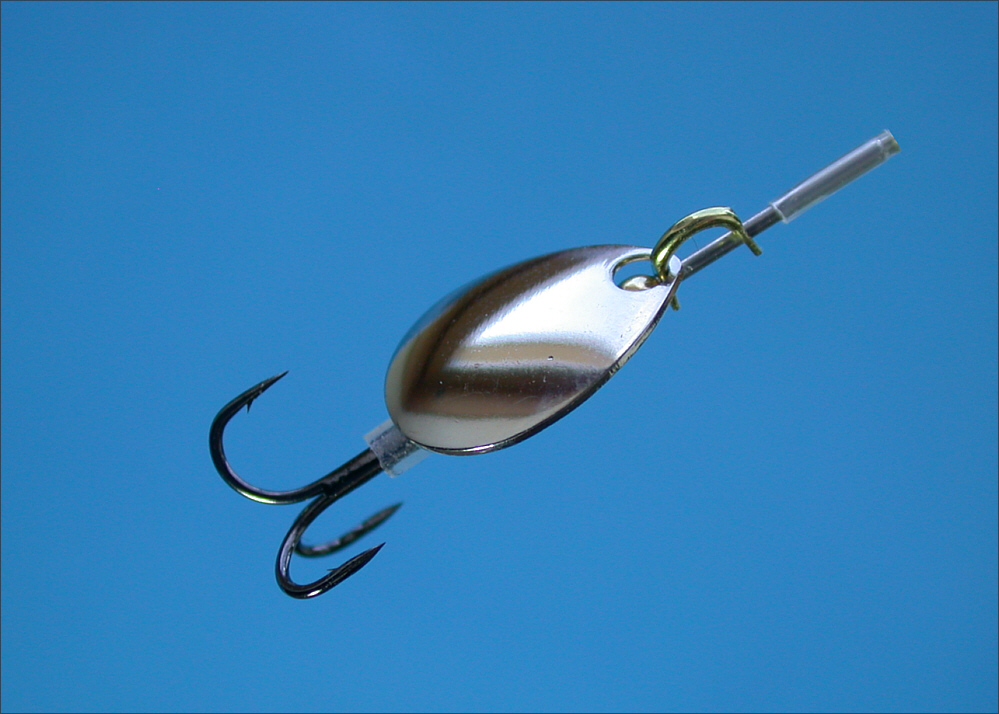
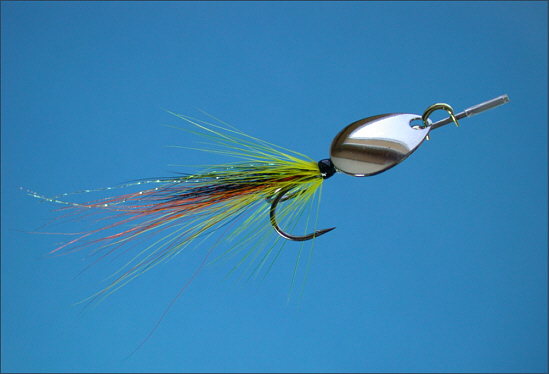
Spinhead fitted
to the front of salmon fly double |
| |
|
 |
| |
| |
|
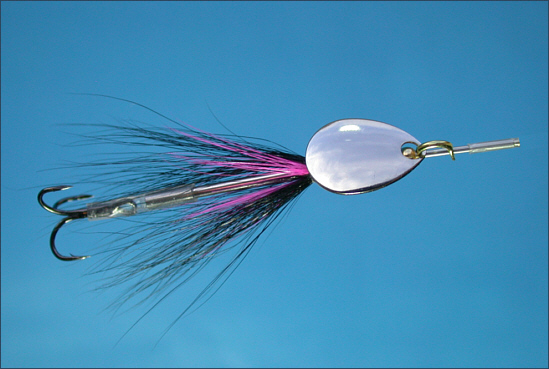
Spinhead fitted
to the front of salmon tube fly |
| |
|
 |
| |
| |
|
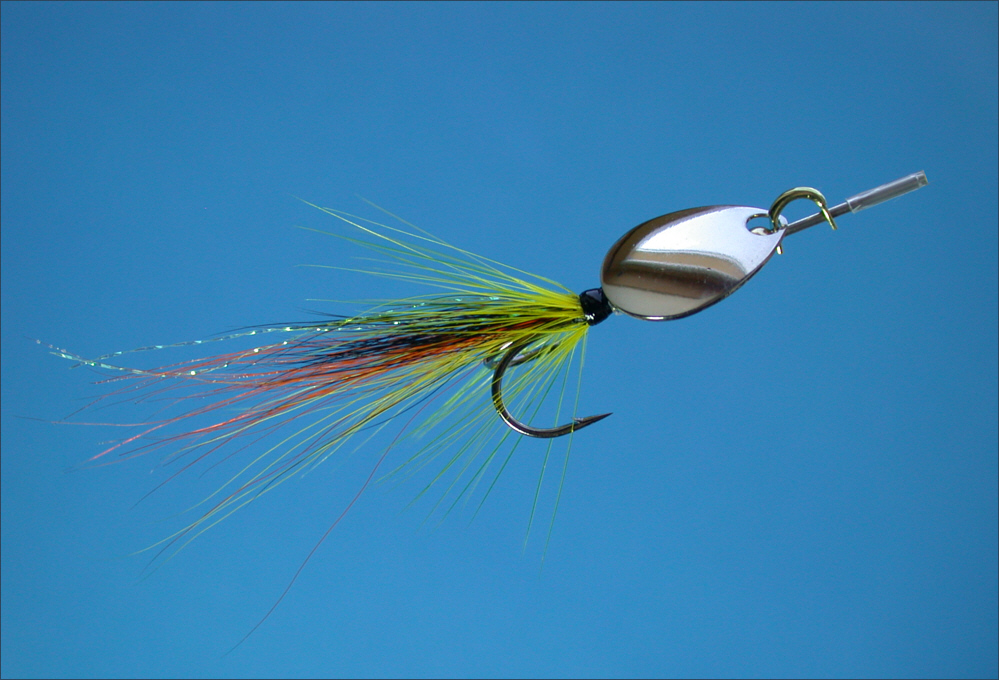
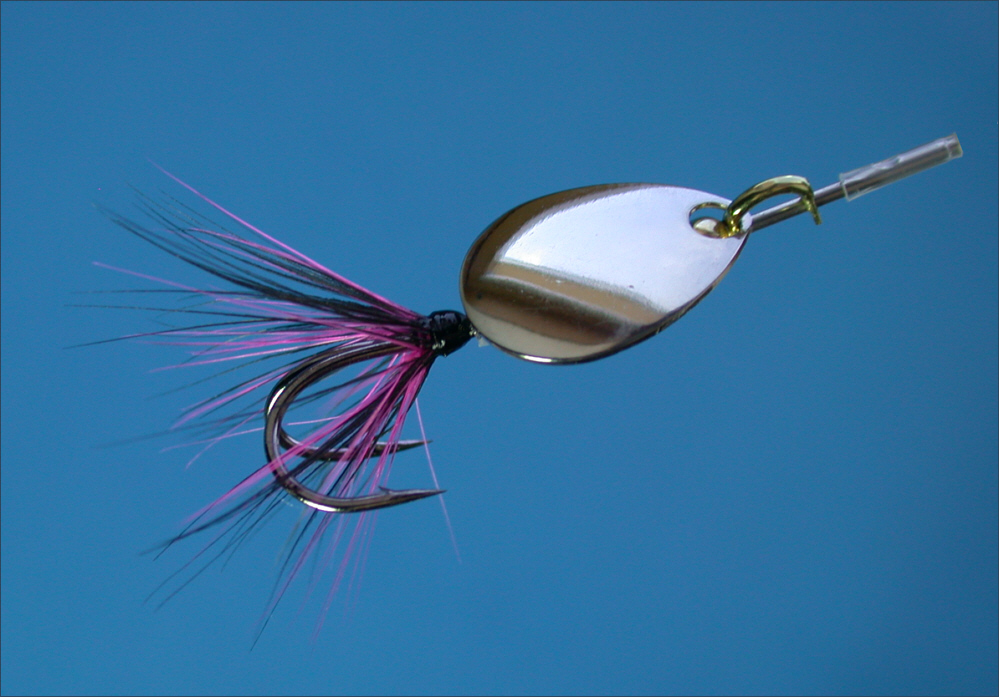
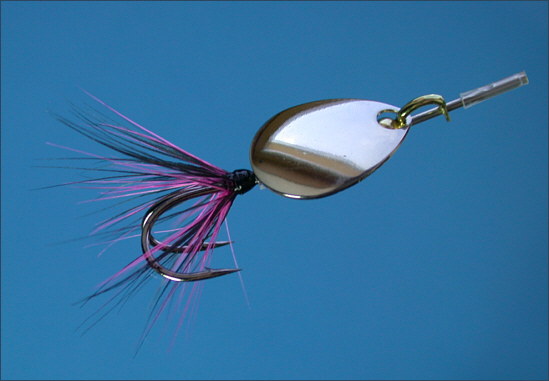
Spinhead fitted
with a lightly dressed double hook |
| |
|
 |
| |
| |
|
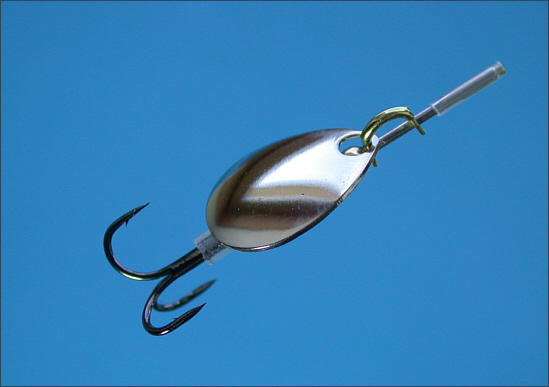
Spinhead used
alone with treble hook |
| |
|
 |
| |
| |
|
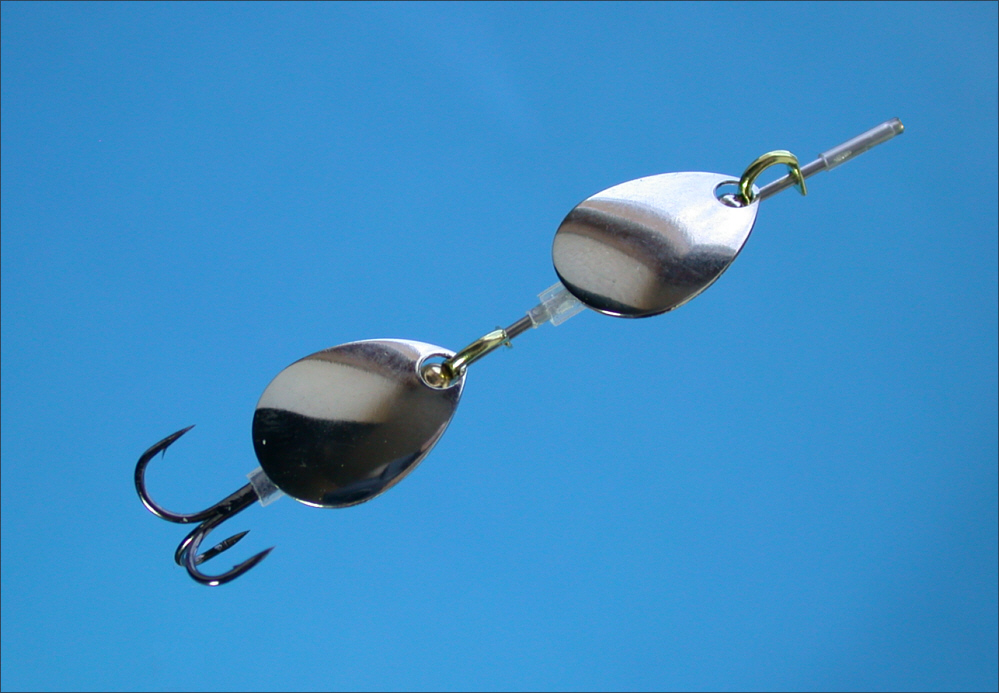
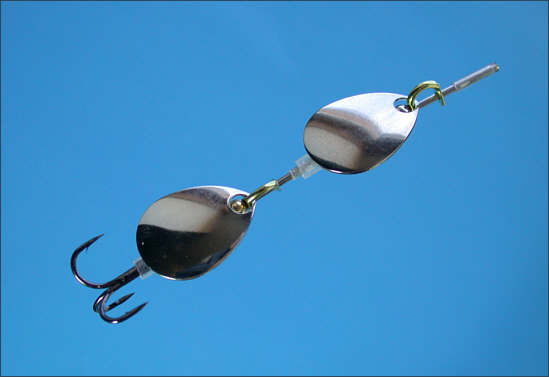
Two Spinheads
connected in tandem |
| |
|
 |
| |
The spinhead weighs only one gram.
This is lighter than the smallest Mepps spoon (size 00) which weighs 1/18th
ounce or 1.5 grams.
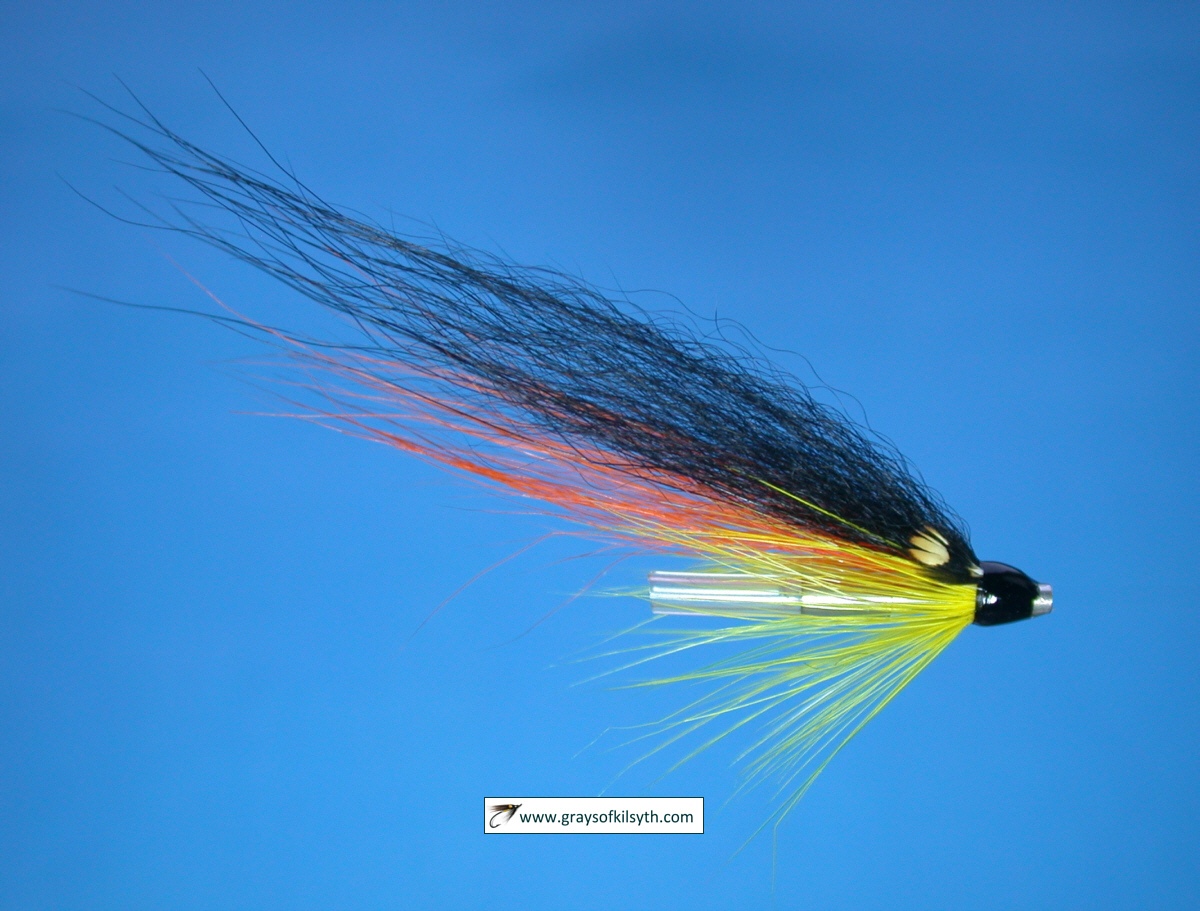
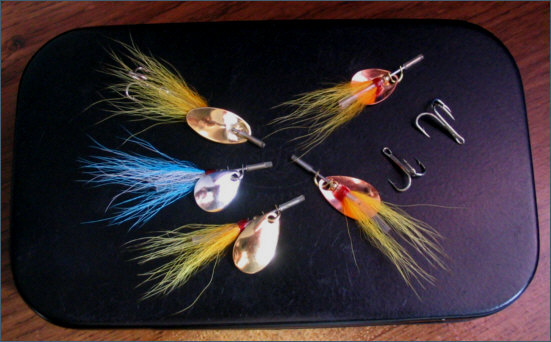
Another option is to dress the body of
the spinhead itself, as shown below, to create a kind of spinning tube fly.
For more information, or to buy a
selection of Spinheads, see
the Spinhead
see
more fishing
articles below
|
|
|