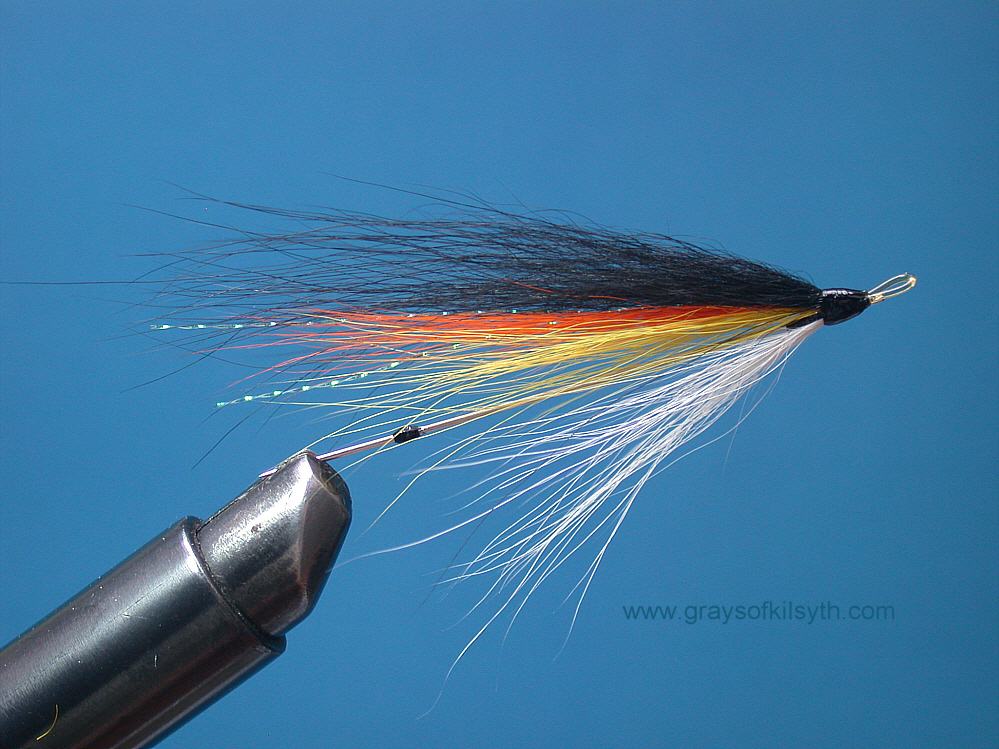
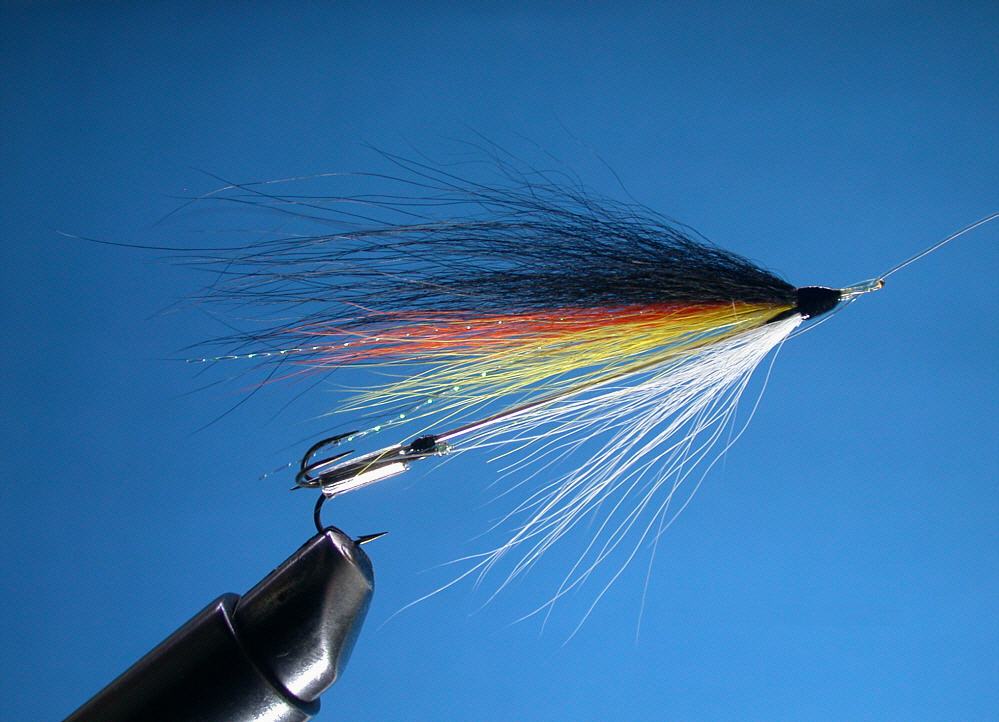
Step by Step dressing of the Needle Fly for salmon and sea trout
by John Gray
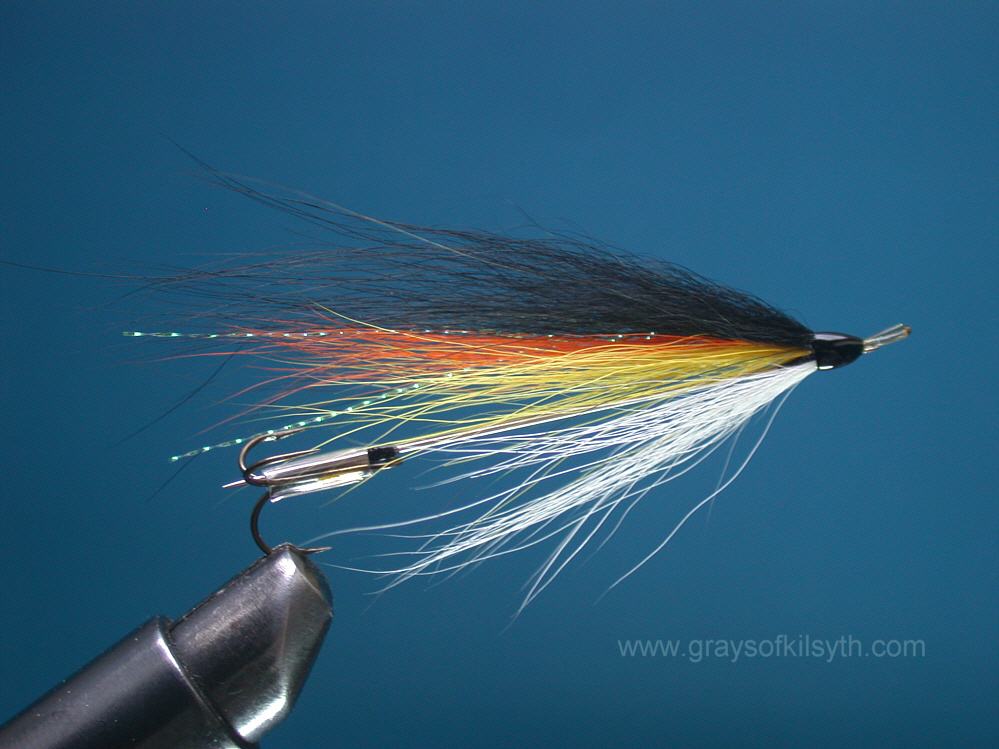
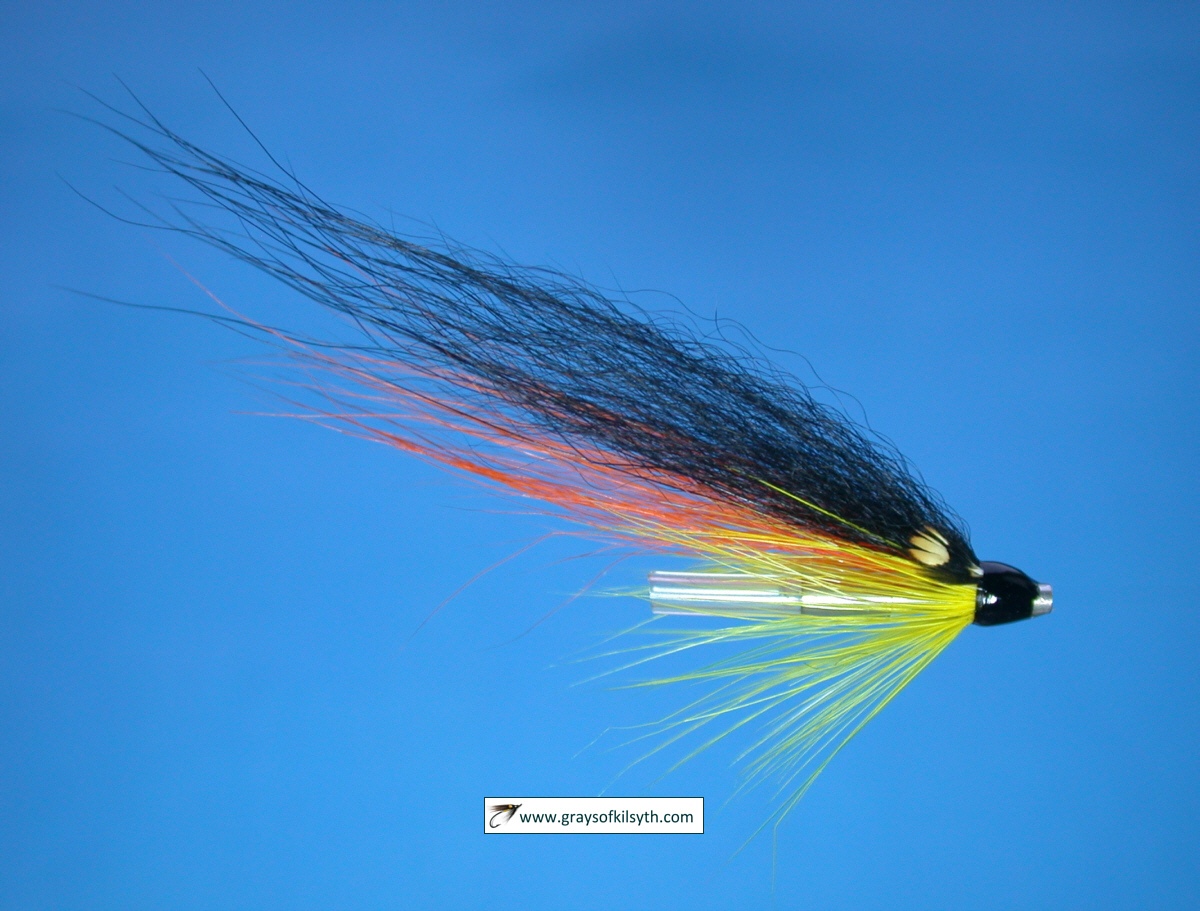
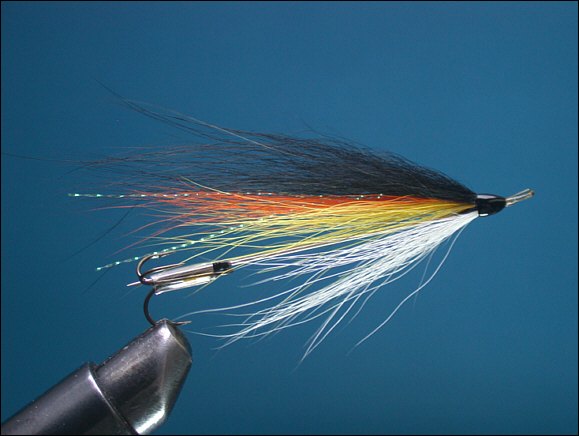
Salmon and Sea Trout Needle Fly
The Needle Fly was devised in the late nineties, as
an ultra-slim alternative to the tube fly and Waddington lure for
late night sea trout fishing on the River Earn in Perthshire. Since
then it has accounted for the majority of my sea trout and a few
salmon, too. Here is a step-by-step sequence of how to make a needle
fly. The dressing may, of course, be varied to taste.
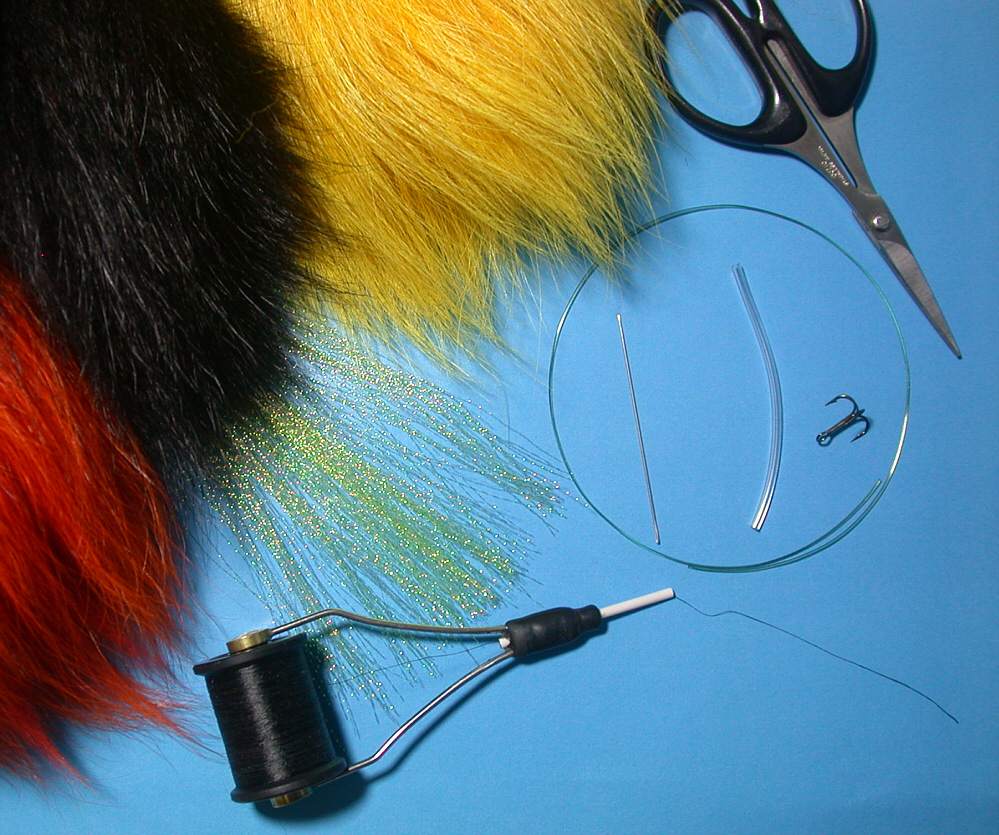
Materials
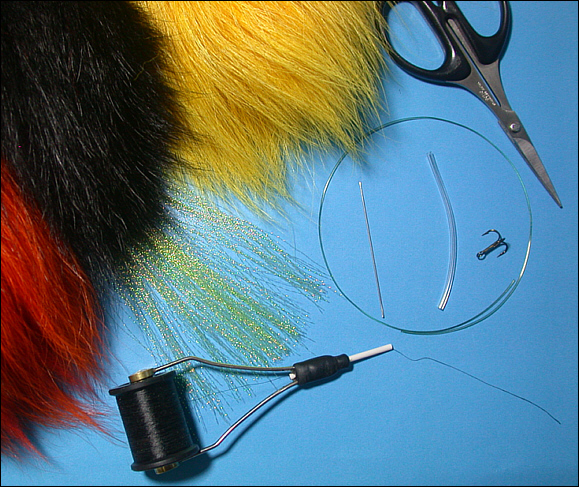
Sewing Needle - I have used here a size 7
long darner
Nylon monofilament - heavy nylon of 25 to
35 lbs
PVC tubing, bore 1.0 mm
Treble hook
Arctic fox or other hair
Krystal Flash or similar
Tying the Needle Fly
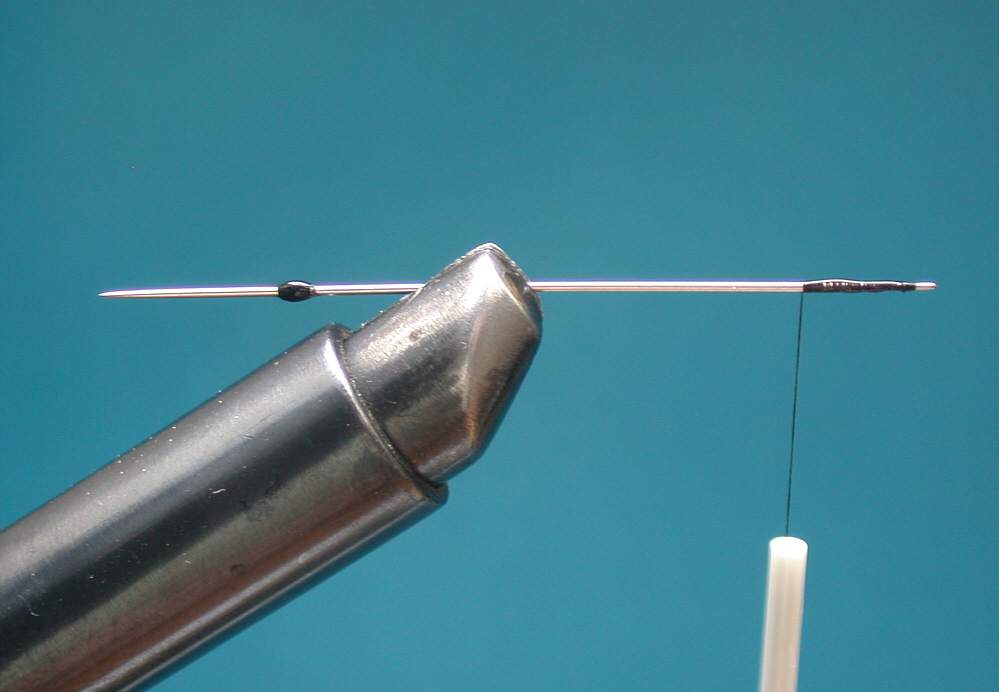
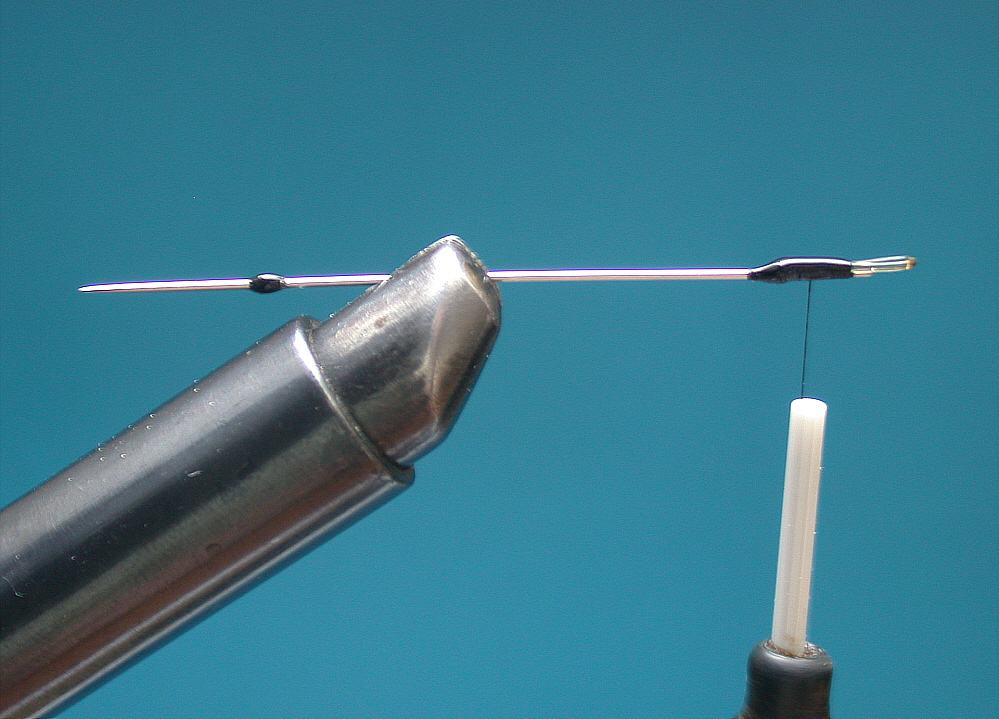
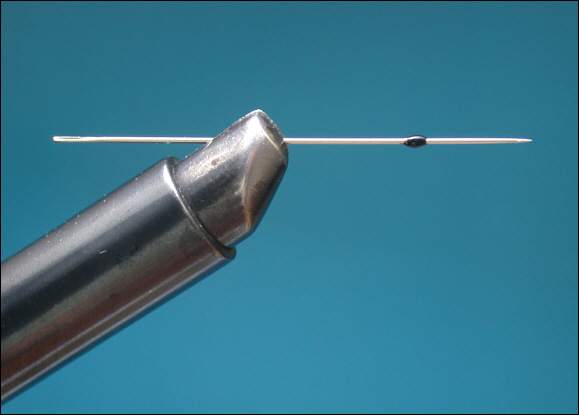
Step 1: Secure needle in vice and tie a
short "stop" or bump of thread one centimetre from the
needle point. Apply two coats of varnish to the stop and
allow to dry.
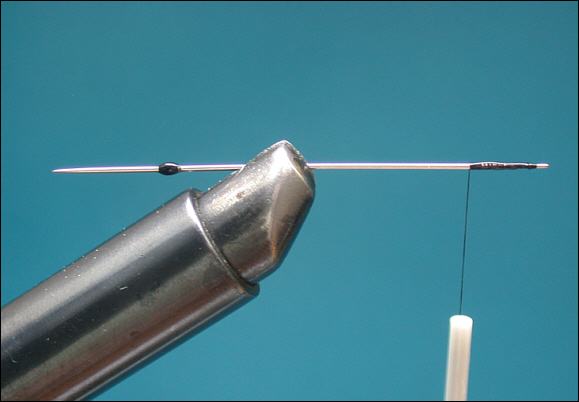
Step 2: Reverse the needle and lay a bed of tying
thread at the head and varnish.
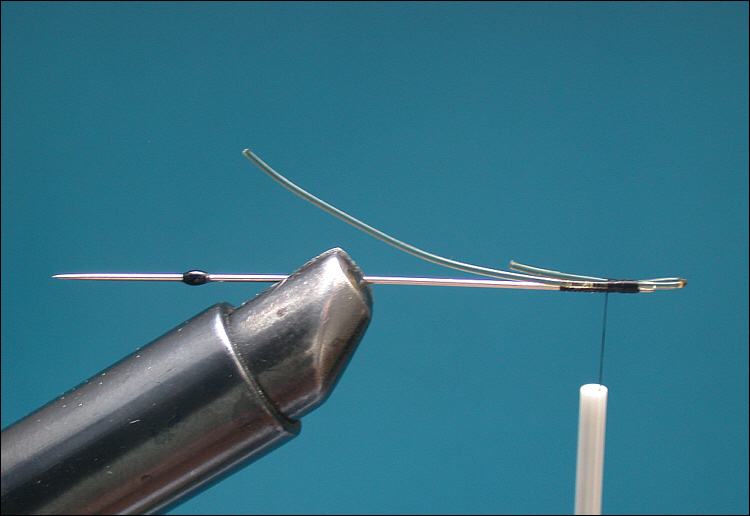
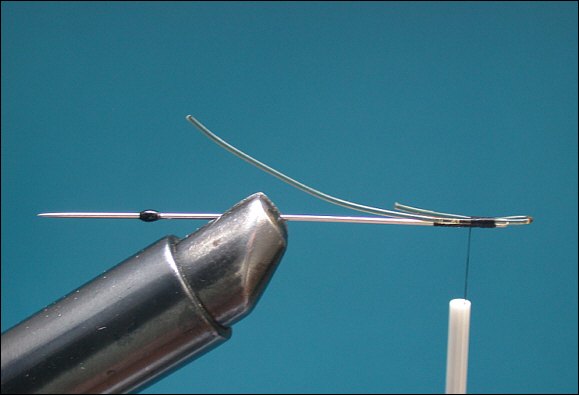
Step 3: Tie in a loop of nylon.
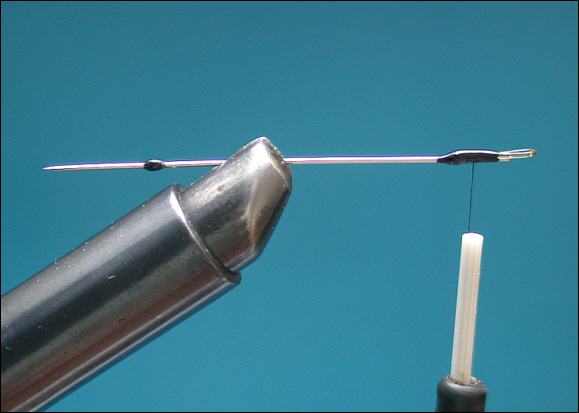
Step 4: Trim the ends of the nylon,
secure with a layer of thread and varnish.
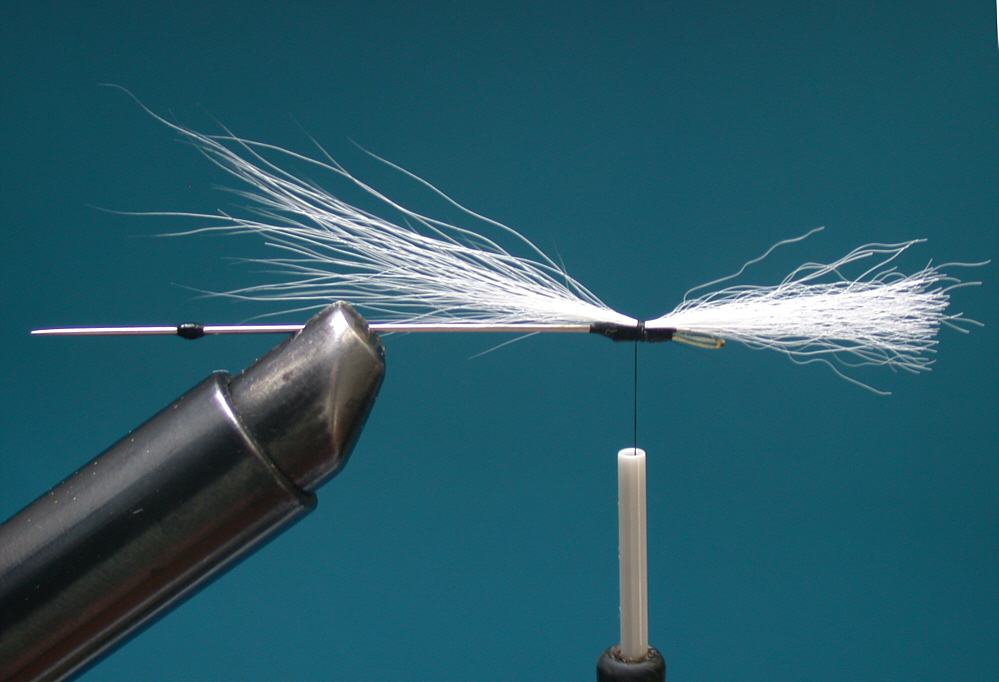
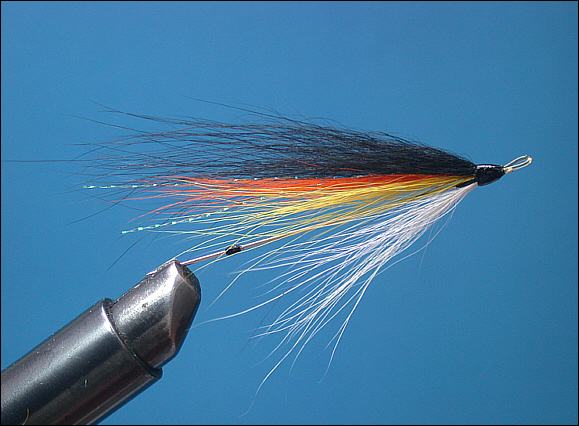
Step 5: Tie in a bunch of white Arctic
fox hair.
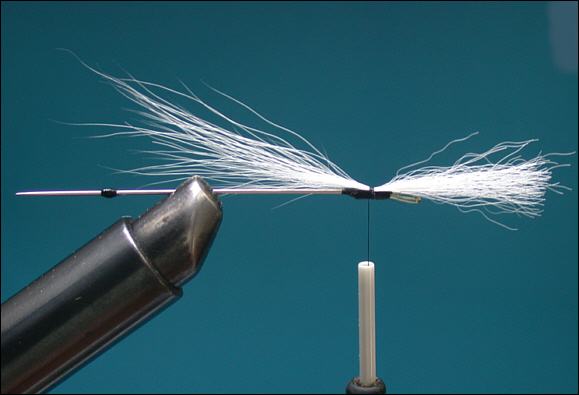
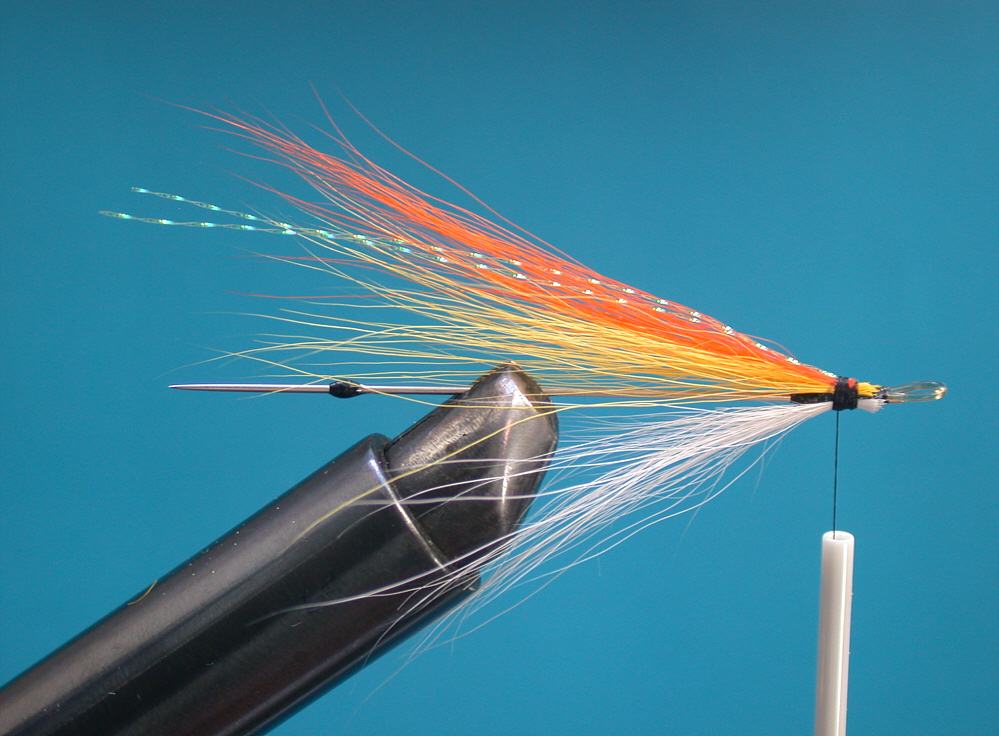
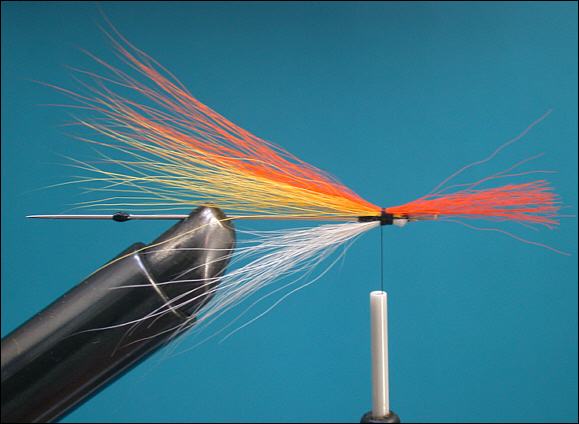
Step 6: Turn needle upside down in vice
and tie in a slightly longer bunch of yellow Arctic fox hair
followed by a bunch of orange Arctic fox hair.
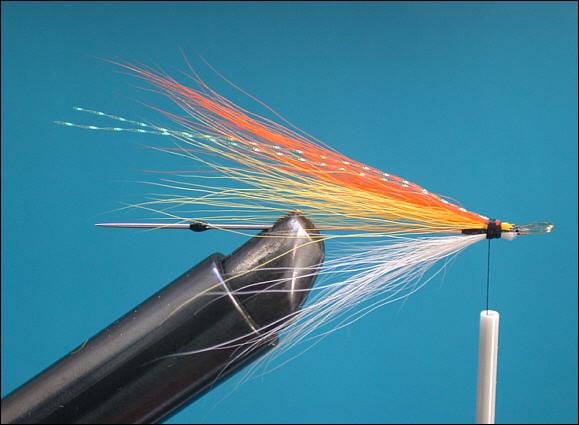
Step 7: Add a few strands of
Krystal Flash to taste.
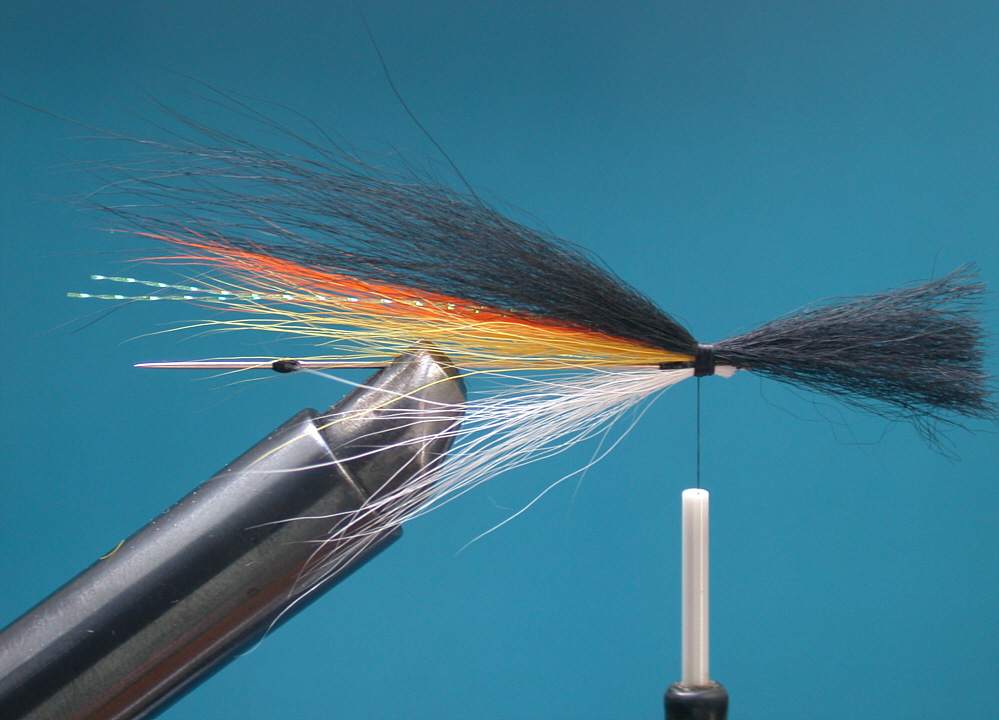
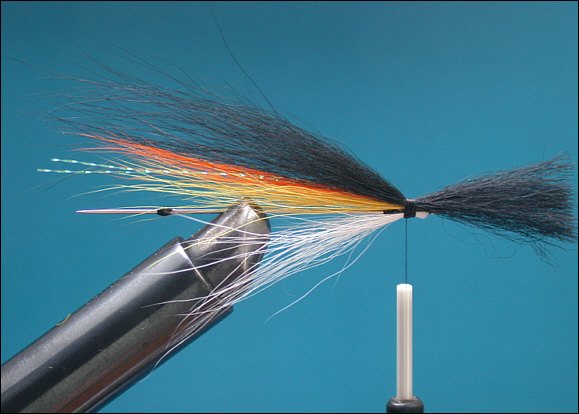
Step 8: Tie in a slightly longer
bunch of black Arctic fox hair
Step 9: Trim the ends of the hair,
form a neat head and apply two coats of varnish
Step 10: Cover the shank of a suitable
treble hook with a short length of tight fitting PVC tubing,
which allows the needle to be secured to the hook.
Attaching the Needle Fly to the
leader
To attach the hook to leader, slip the leader through the
nylon loop at the head of the needle fly, tie on the adapted
treble hook and push the point of the needle into the PVC
sheath as far as the thread stop, so that the nylon leader
lies along the underside of the fly with the needle on the
top side of the treble hook. I like to store the adapted
hooks and needle flies separately in a foam lined box until
needed.
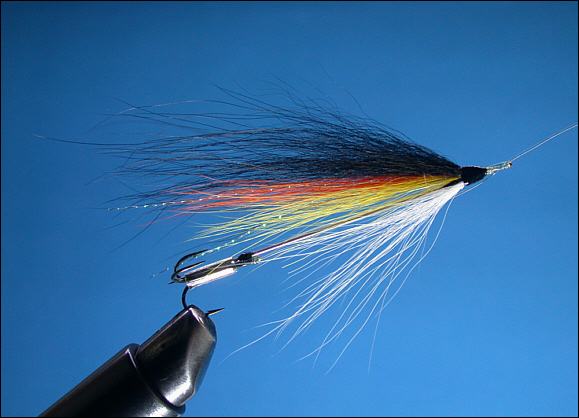
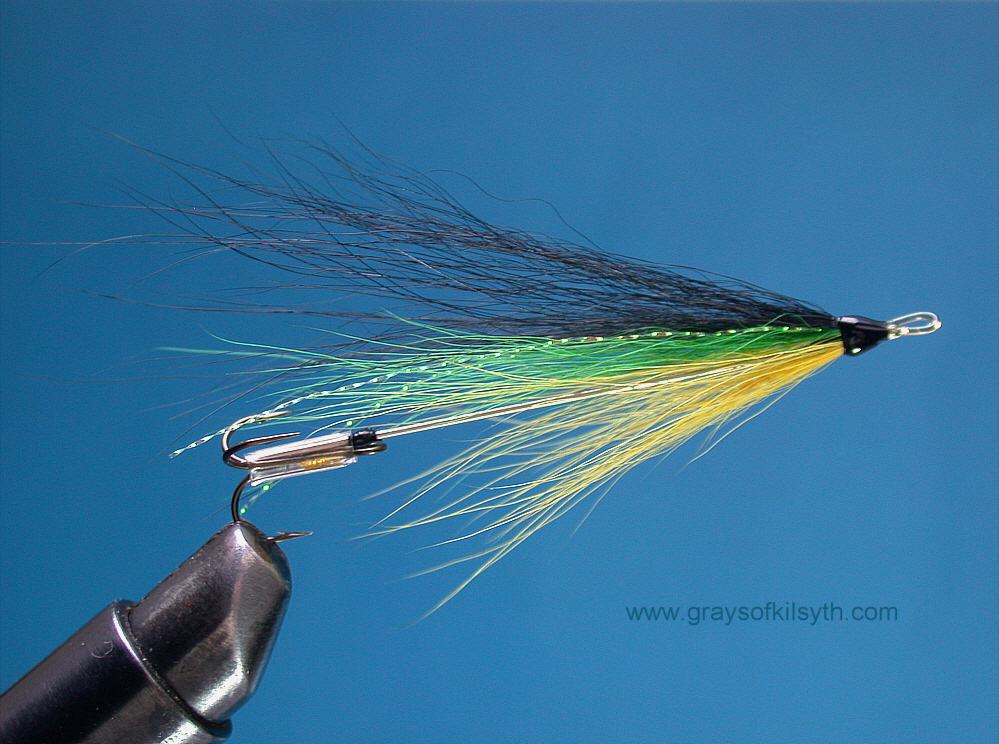
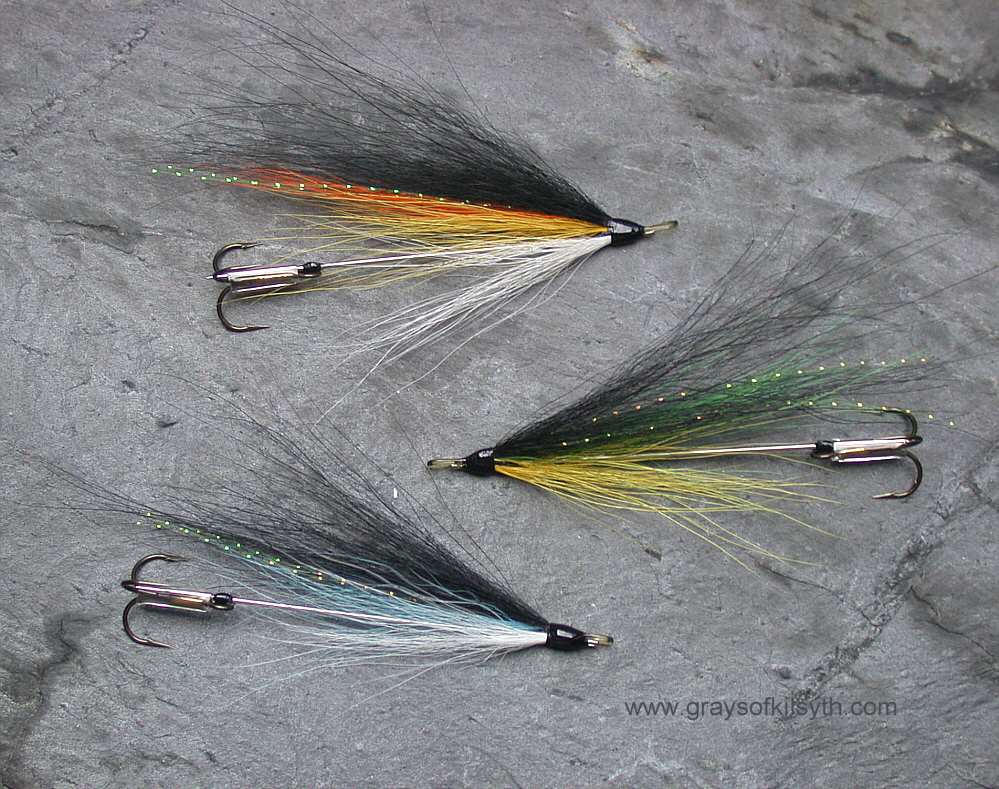
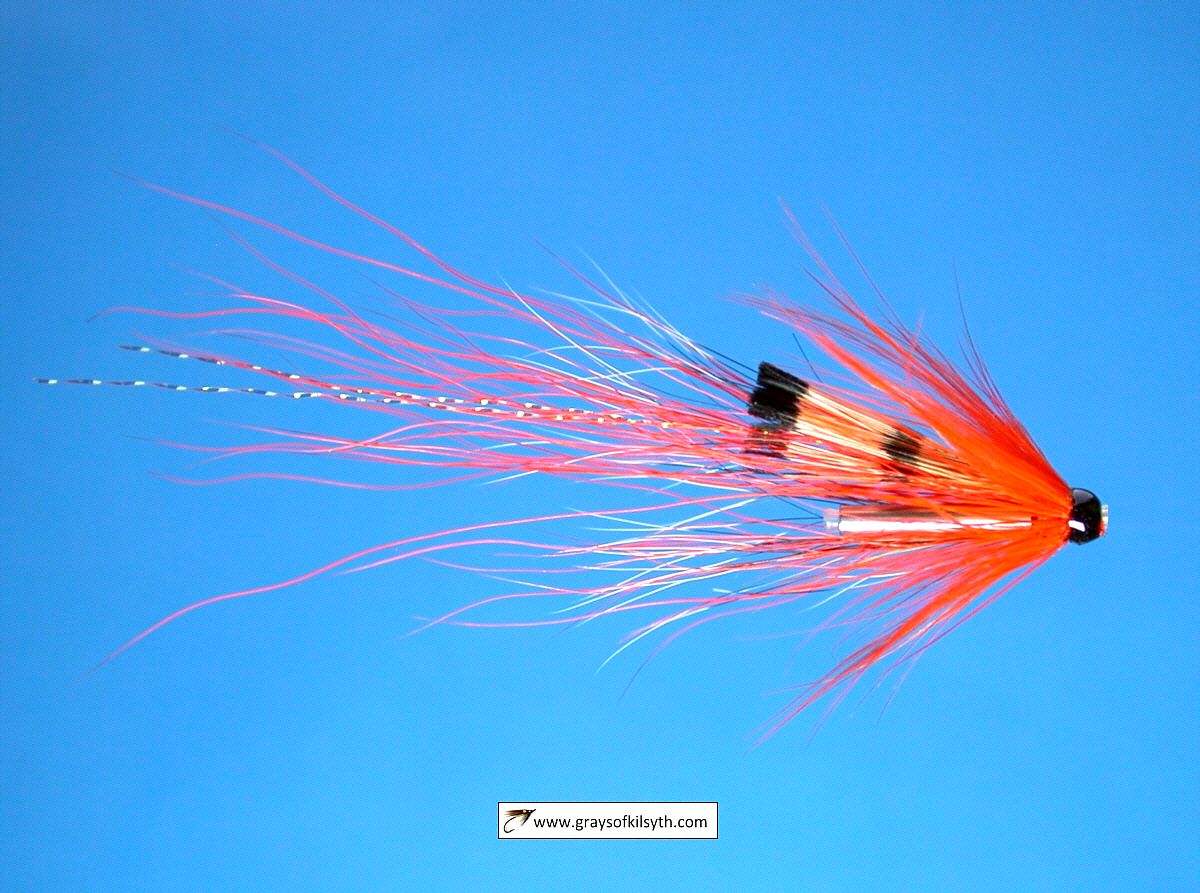
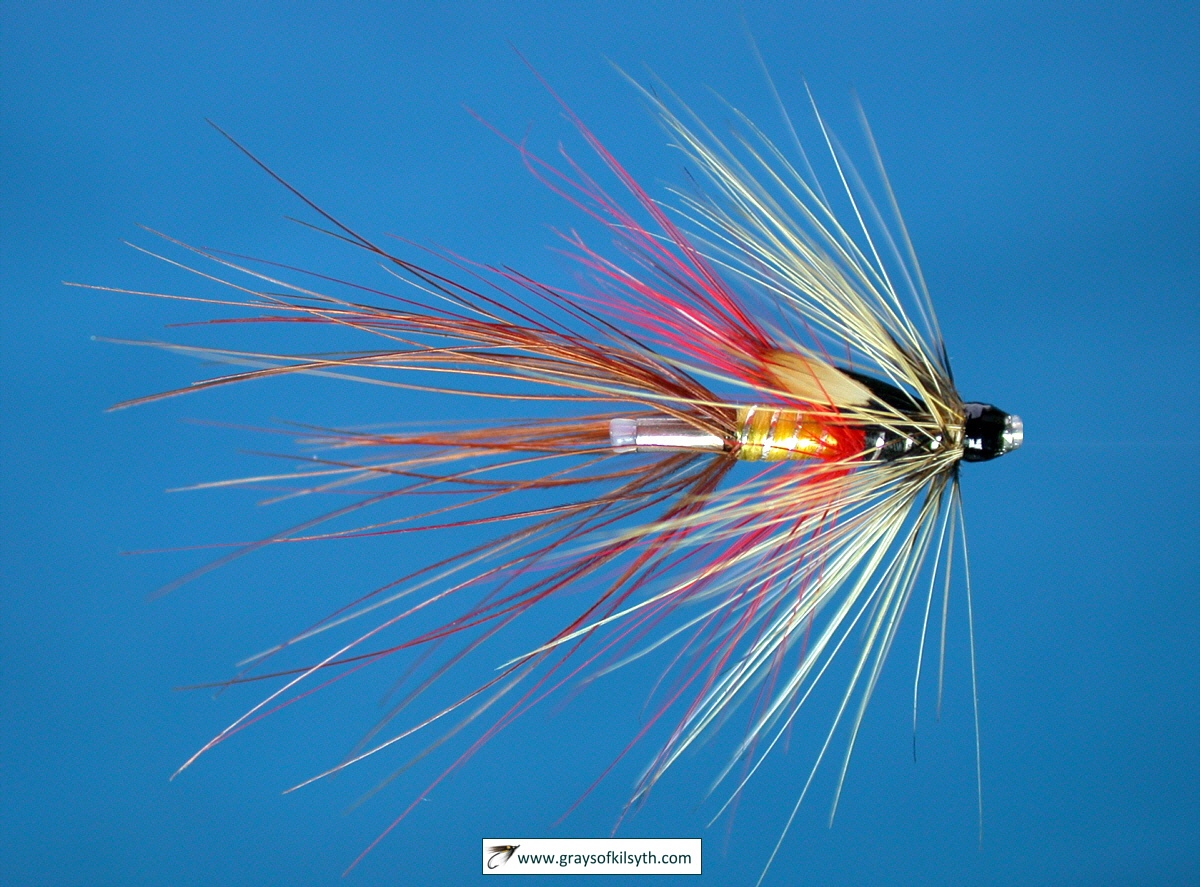
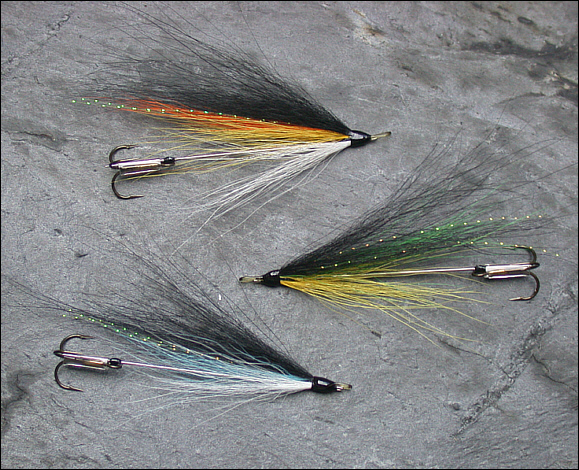
The dressing may be varied to taste and circumstance.
Two more examples
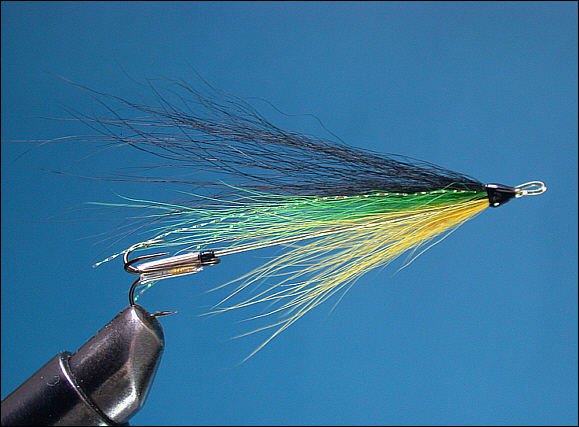
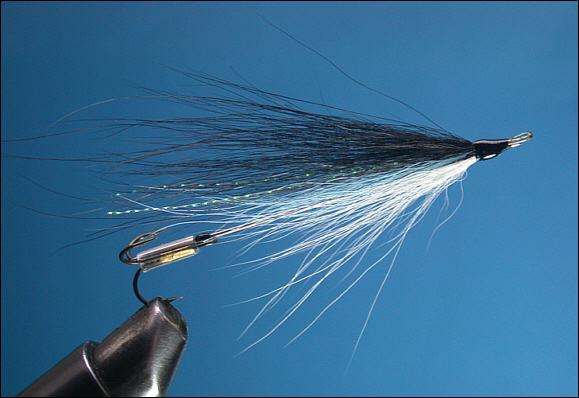
For more information on the origin,
development and making of the Needle Fly, see:
Making the Needle Fly
The Needle Fly - Components and Construction
Using the Needle Fly |