Slim Tubes for Sea Trout and Salmon
by John Gray
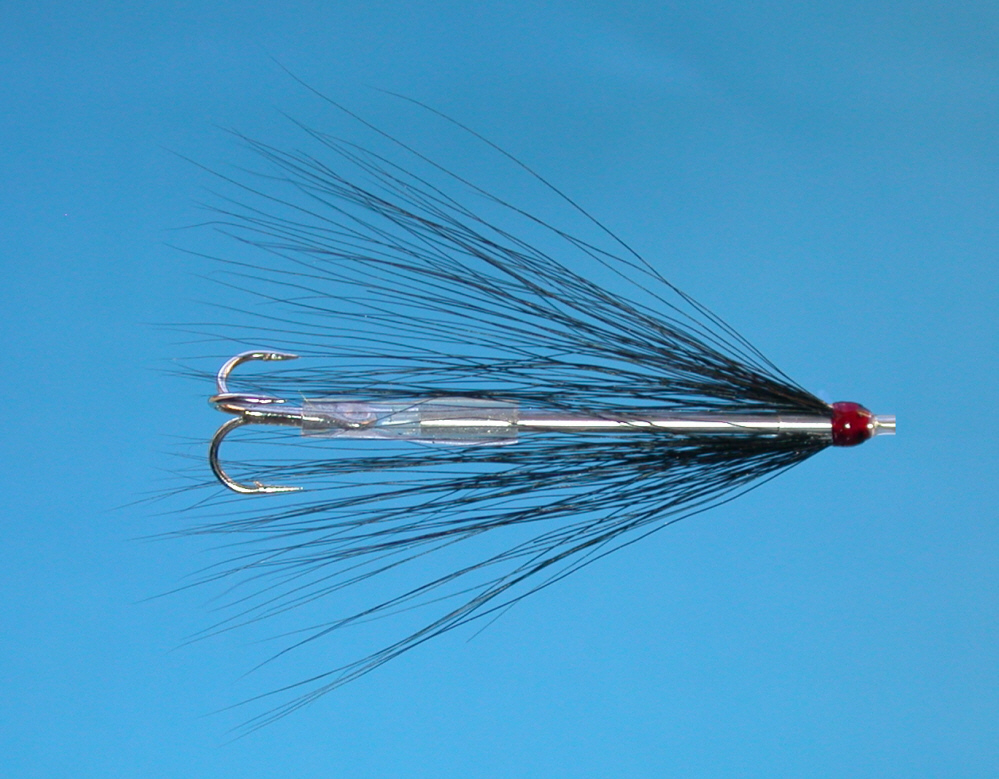
Micro Tube Fly
Often the best ideas, in
fly fishing as in other fields, are the simplest. For those of us who
fish for salmon and sea trout, the tube fly must rank among the very
best of fly fishing innovations. The basic idea - some hair whipped on
to a plastic or metal tube with a treble hook trailing behind - is so
simple and effective that it may seem hard to improve upon, yet
generations of salmon and sea trout fishers have, over half a century,
added their own small refinements and innovations - making use of various materials, from the lightest
of plastic to the heavier aluminium, brass and copper, in an effort to vary the
weight of the fly and the depth at which it will fish; inserting nylon liners to
prevent the line rubbing on the sharp metal tube ends; adding extensions of
silicone rubber to the rear of the tube to provide a secure, yet flexible, hold
on the treble hook; and, of course, what fly tyer can resist the temptation to
combine a unique blend of fur, floss and feather to create his own "special"
fly.
The tube fly has found its way, over the years, into the fly
boxes of many salmon fishers. Early in the season, and again at the back end of
the year, salmon fishermen will be found casting heavy brass and copper tube
flies attached to fast sinking lines, propelled by long, powerful rods in the
heavy flows of our famous salmon rivers. Many a summer grilse has been lured by
the smallest of
plastic tube flies fished on a floating line in shrunken
highland streams. But it was in the possibilities presented by the tube fly as a
lure, not so much for salmon, but for summer sea trout that our main interest
lay.
Night fishing for sea trout is rarely successful with the river
running much above summer level. In a high, coloured river, the only chance of a
fish will be during daylight hours. Consequently, our sea trout night fishing is
done with the river running at, or slightly above, summer level. In such flows,
heavy flies, such
as those tied on brass or copper tubes, are rarely needed. Lighter tube flies,
however, such as those tied on plastic and aluminium tubes, often fished on slow
sinking lines, have long been favourites among sea trout fishers and they are an
indispensable part of the night fisher's armoury. But could there be a place for
a medium weight tube, somewhere between the heavyweight brass and copper tubes
and the lighter plastic and aluminium? In the quest for that slim, tenuous,
impressionistic lure, so favoured by Falkus, would it be possible to find a
material which might be adapted to the construction of an extremely slim, medium
weight, tube fly, which might be produced in varying lengths, and would be
effective in all heights of water, for both day and night sea trout fishing?
I had been corresponding
with Dave Wallbridge, a keen Dovey sea trout fisher, in researching the
options. Our thoughts turned to needles...... of the hypodermic kind, in
shiny, pristine, stainless steel, the finest type of metal tubing available
commercially. But how successfully might such tubing be adapted for use as a
tube fly, and
could it be easily procured? After some research and deliberation, we decided on
19 gauge hypodermic tubing, with an outside diameter of 1.1 mm and an inside
diameter sufficient to accommodate the heaviest of nylon likely to be used in
sea trout, or salmon, fishing. [ note: 20 gauge tubing can be used to produce an
even slimmer tube fly with an outside diameter of less than 1 mm.] We found a
source in
Coopers of Birmingham and purchased a few metres, more than enough for
experimental purposes.
It was originally hoped that the stainless steel micro tube (hypodermic needle
tubing gauge 19) could be used on its own to produce a very slim tube (O.D 1.1
mm). It was found, however, that, no matter how carefully deburred, the sharp
edges of the tube ends cut into the nylon leader while fishing. So how might
this problem be overcome? It was impractical to line such a narrow tube with the
conventional nylon liner, so how might the sharp ends of the stainless steel
tube be prevented from coming into contact with the nylon leader? One solution
is to cover the whole tube with heat shrink tubing, being careful to leave a
short extension of heat shrink at both ends covering the sharp edges, in order
to protect the nylon, as in the accompanying photographs.
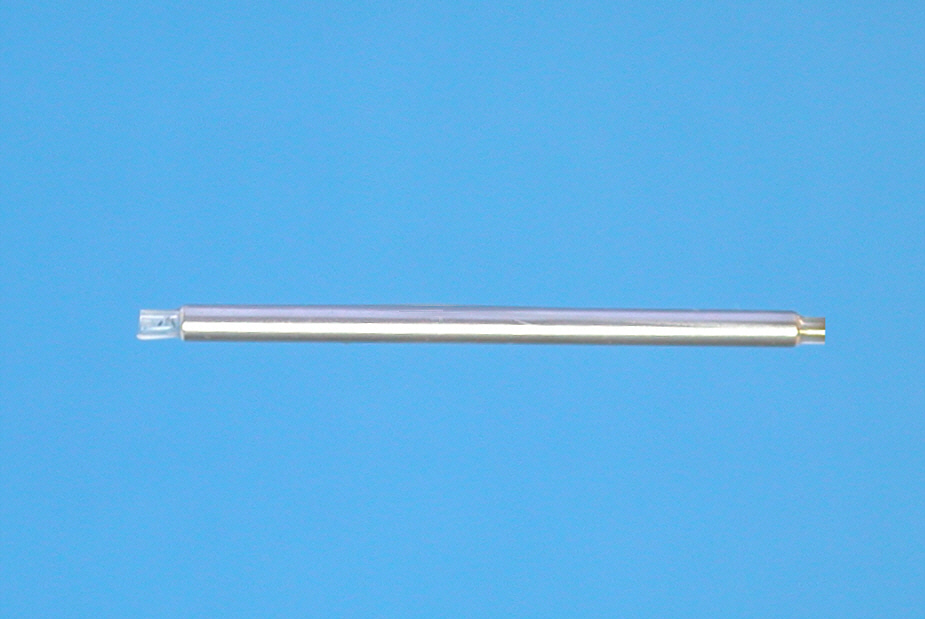
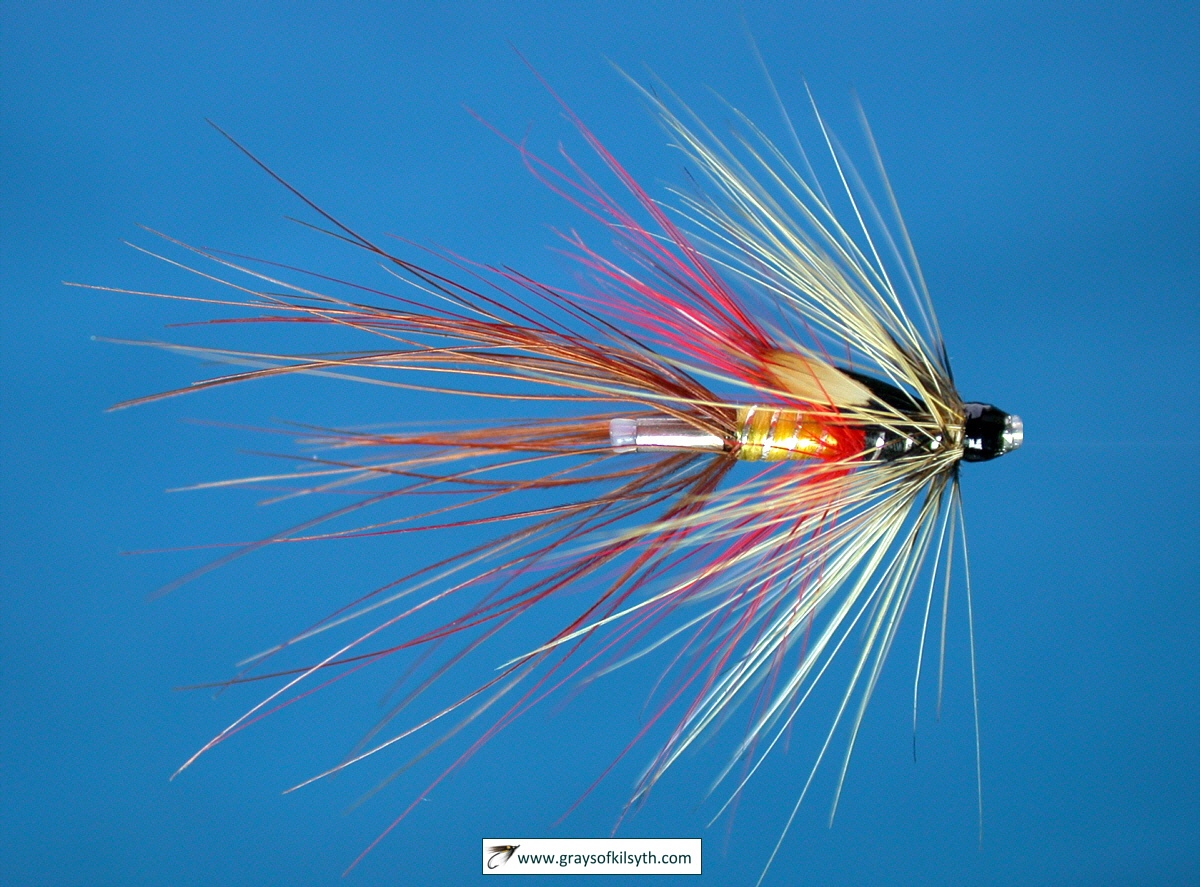
Stainless steel micro tube in heatshrink
sleeve
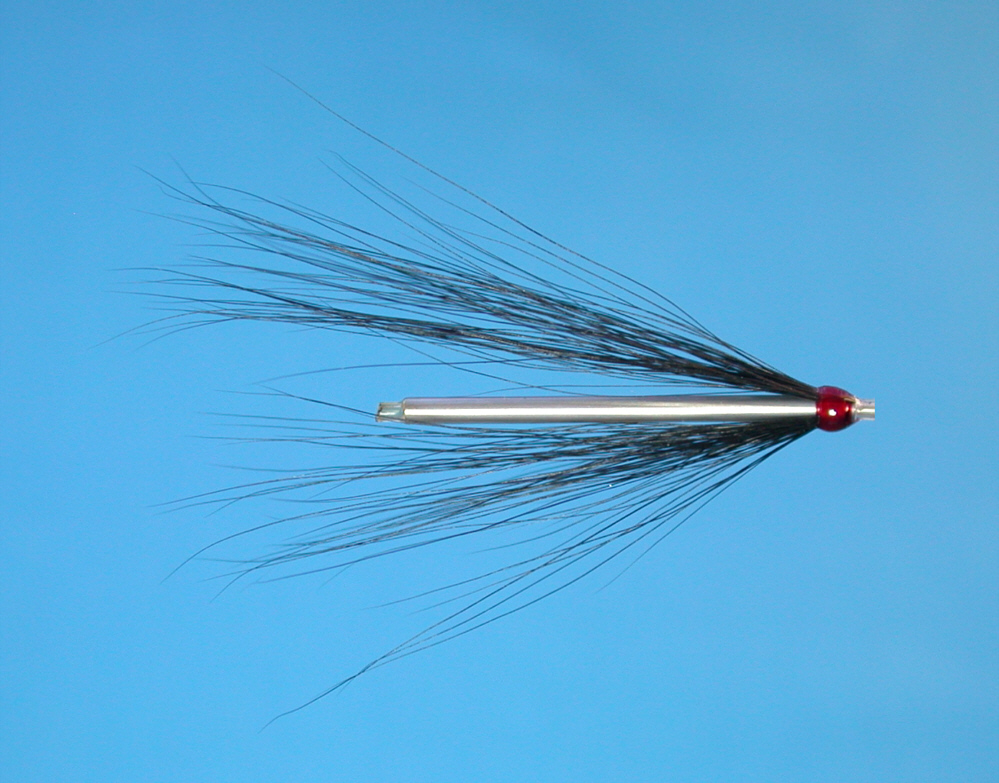
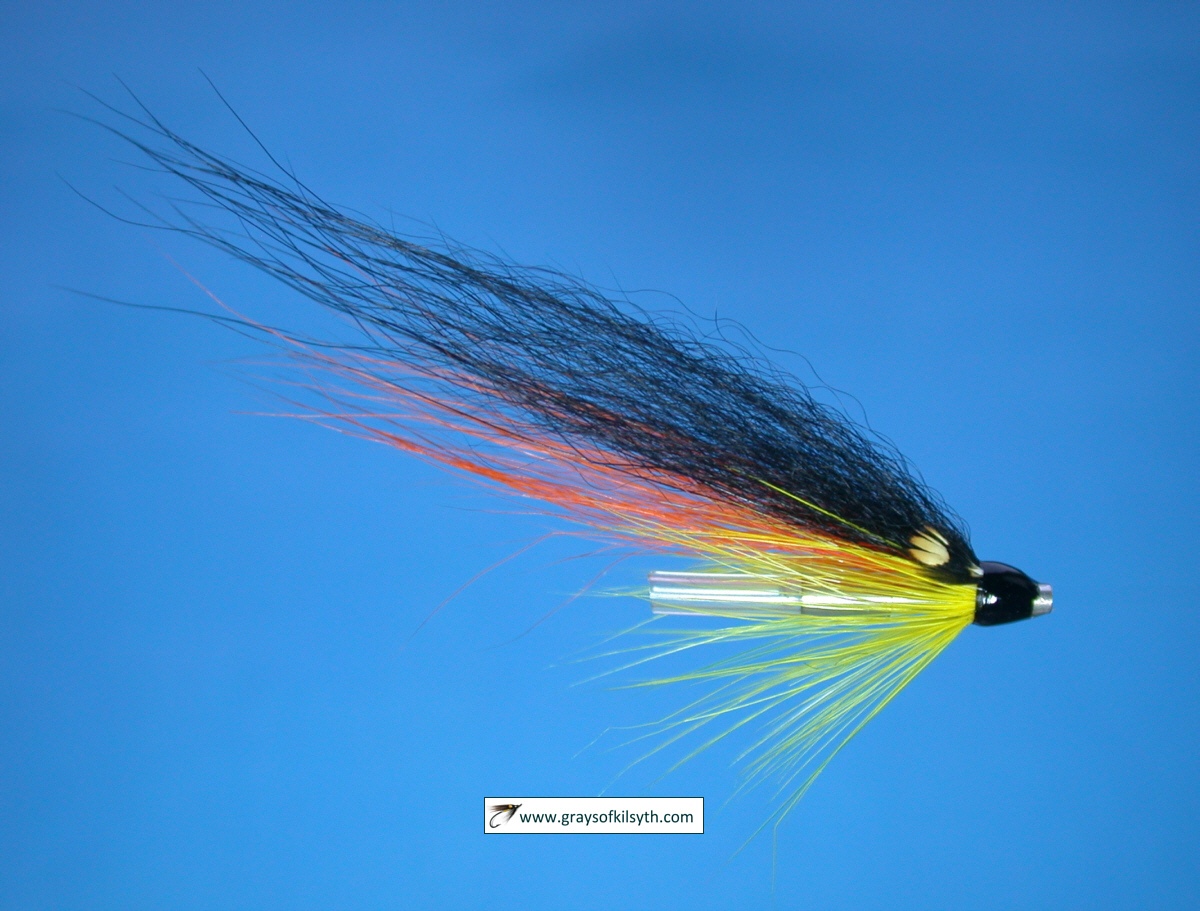
Microtube with simple dressing of black squirrel
The
shrinking process is most simply done as follows.
The stainless steel micro tube, covered by a length of heat shrink tubing,
should be slid over a darning needle (a size 9 "Long Darner", diameter 0.61mm,
is about right). The heat shrink tubing is held over the flame of a lighter for
a second or two, until it shrinks
on to the metal tube, being careful not to burn or melt the tubing in the
process. When the tube has cooled and hardened, it can be slid off the needle.
Alternatively, it is possible to form a slightly wider opening to facilitate the
threading of the nylon leader (particularly useful if attaching the tube at
night by feel), while retaining maximum shrinkage and security at the tube ends.
For this, a thicker needle, with a maximum diameter slightly larger than the
inside diameter of the stainless steel tube, can be used. The point of the
needle is inserted in the metal tube end and heat shrink tubing slid over both
the metal tube and slightly beyond the end of the tapered section of the needle.
The lighter flame is then applied as above, shrinking the plastic heat shrink
tube over both the tube end and the tapered section of the needle and leaving a
wider opening in the plastic tube extension. This is particularly useful at the
front end of the tube, making it easier to thread the nylon leader through the
tube. We used what we believe to be the finest heat shrink tubing
generally available, shrinking from 1.2mm to a diameter of 0.6mm and available
from R.S. Components (www.rswww.com)
code number 288-5156.
As an alternative, it is possible to cover the sharp edges at both ends and
still retain the slimness, and flash, of the stainless steel tube. This can be
done by shrinking short extensions of heat shrink tubing front and rear, leaving
most of the stainless steel micro tube uncovered, as shown below.
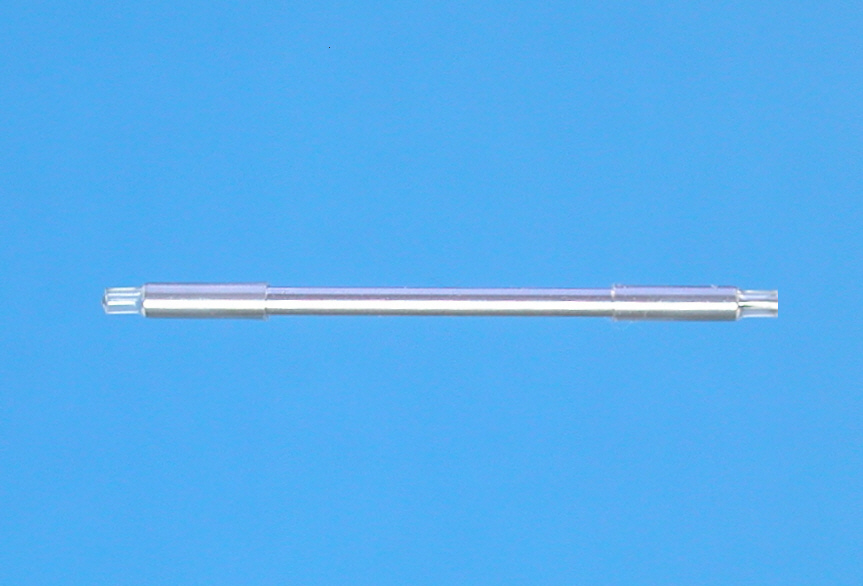
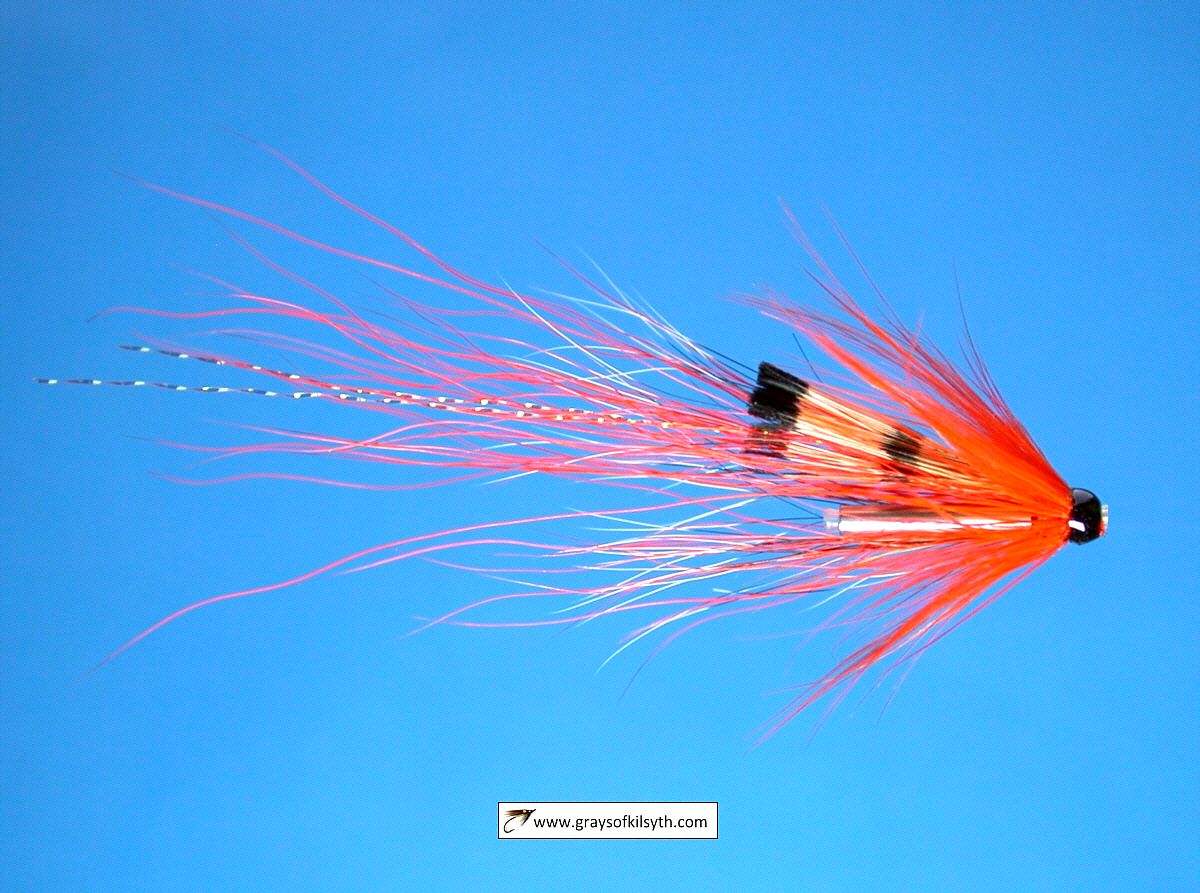
Micro Tube with heat shrink extensions
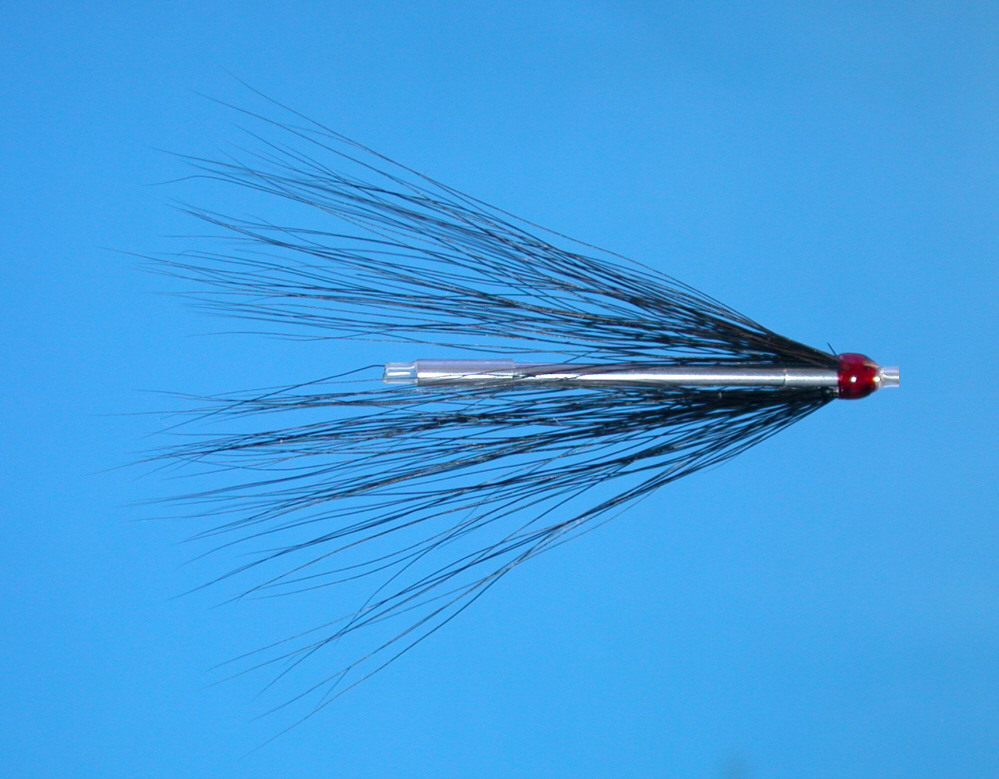
A simply dressed Micro Tube
Micro Tube with silicone hook link and size 16 treble hook
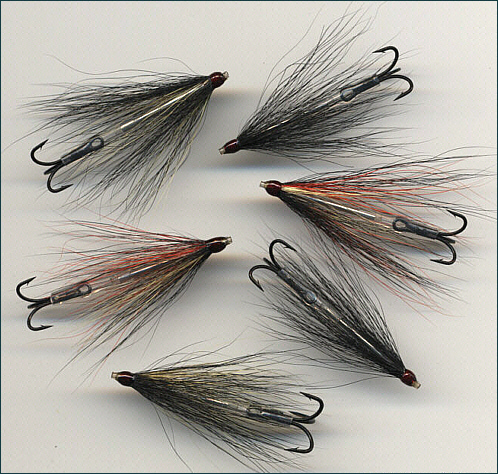
A selection of Microtube Flies
While it is essential, regardless
of which technique is used, to thoroughly deburr the inner cut edges of the
stainless tube (i.e. those parts of the tube ends which may come into contact
with the nylon line) before adding any plastic tube, there may be some advantage
in leaving, or even emphasising, the rough outer edge to help secure the heat
shrink extensions.
In line with common practice in
the use of conventional tube flies, an additional short extension of silicone
rubber of a suitable diameter can be slid over the rear end of the finished
micro tube fly to provide a secure but flexible hold on the treble hook. Clear
silicone tubing, with a bore of 1 mm and a wall thickness of 0.5 mm, as used in
the examples shown in the photographs above, is perfect for the job.
For the latest micro tube developments see
Needle Tube Flies
See also
How to make a knot guard (or swing tube) for a Free Swinging Tube
Fly Hook
more fishing
articles
|
|
Resources
Grays of Kilsyth
Salmon Flies
Trout Flies
Sea Trout Flies
Tube Flies
The Tube Fly Shop
Salmon Fishing Scotland
Trout Fishing Scotland
Sea Trout Fishing
Sea Trout Fishing
Book
|