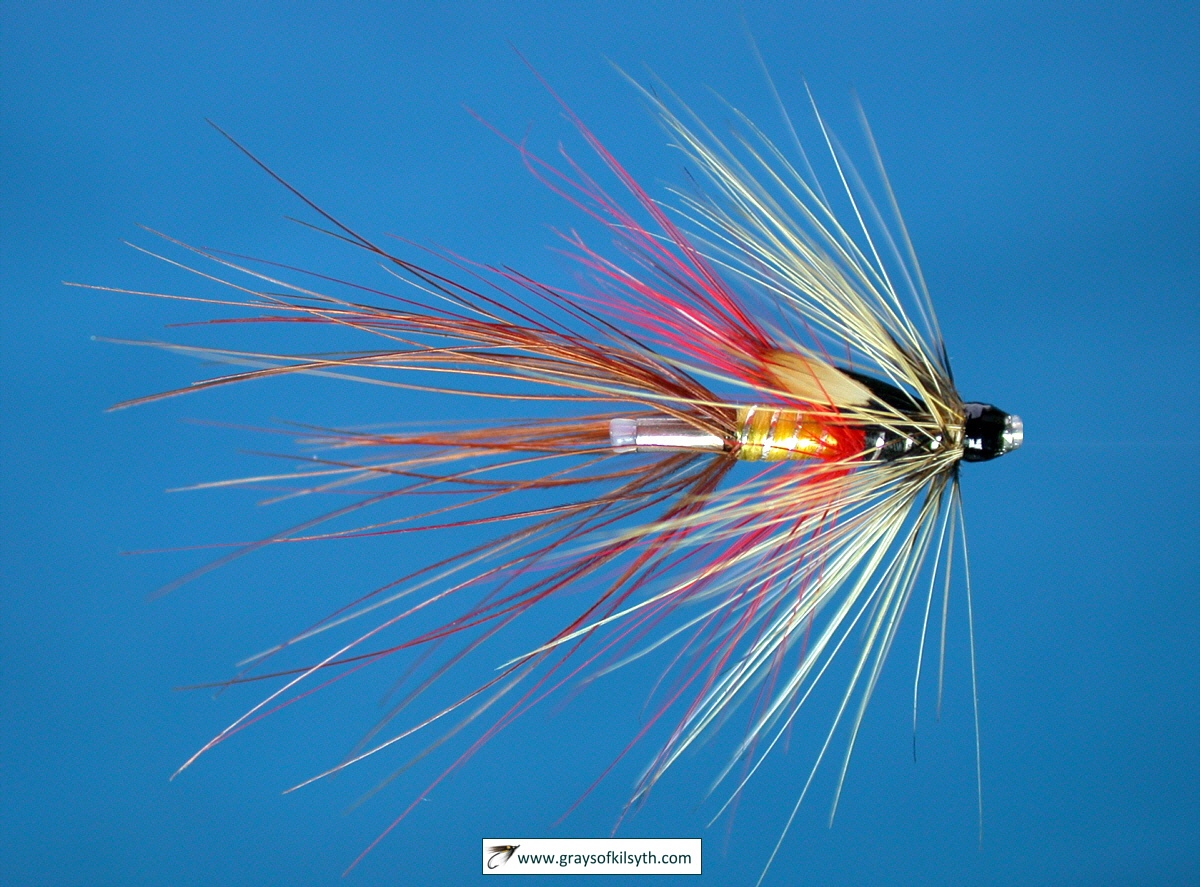
Has the needle tube rendered the
Waddington shank redundant?
by John Gray
The Waddington lure was devised
by Richard Waddington in the
middle of last century. In
"Salmon Fishing", published in
1947, he writes, "My
ideal salmon fly, however, is
quite revolutionary. The shank
will remain a steel bar -
though were it not for the
weight I should prefer something
pliable like a heavy nylon
strand. This will be linked with
a plain loop to a small
triangle. The fly will not be
dressed in the normal way. The
body will be the same but the
wing will disappear to be
replaced by plenty of hackle
dressed all round the fly so
that whichever way it is turned
it will have the same
appearance.
I surmise that this fly will
look more natural in the water;
that the small triangle is less
obvious than a large hook and
that once the fish is hooked it
will give a better hold. The
link in the shank will obviate
much of the strain and movement
in the hook."
The "Waddington" later became
popular with those salmon fly tyers seeking to create a long
bodied, medium weight salmon or
sea trout fly but with a slimmer
profile than flies dressed on
conventional tubes (copper,
brass, aluminium or plastic),
which have a typical diameter of
about 3mm. While the Waddington
lure (dressed on a Waddington
shank) does have a slim profile
and allows the use of a
relatively small treble hook, it
has two disadvantages. Firstly,
it is not so easily dressed as a
tube fly and, secondly, the
treble hook is not so easily
replaced when damaged.
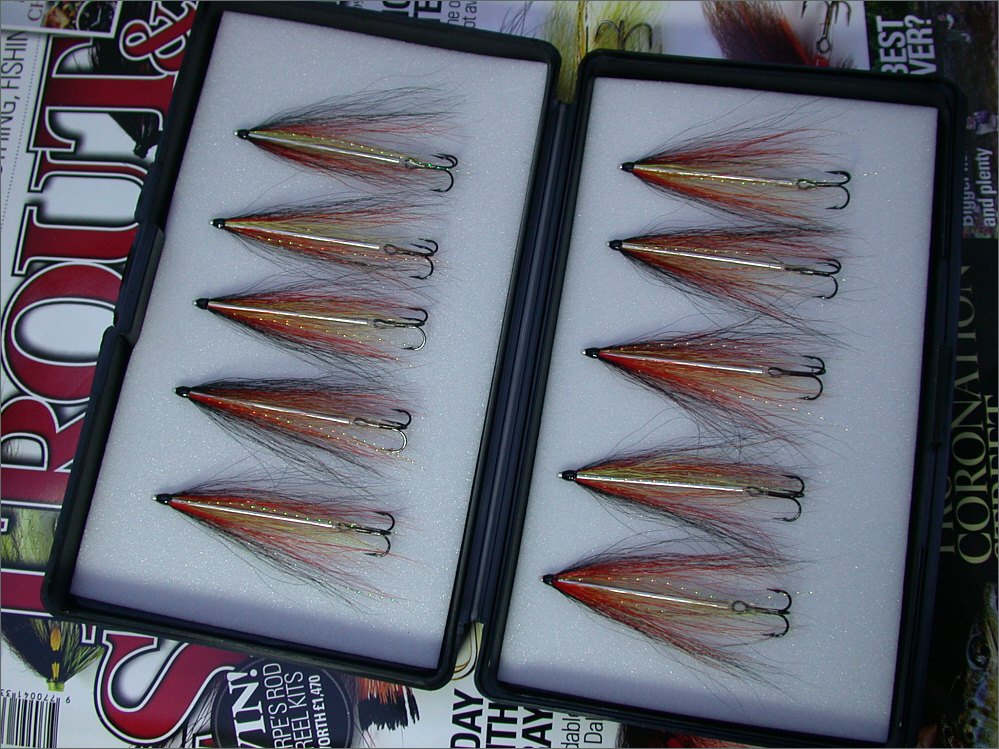
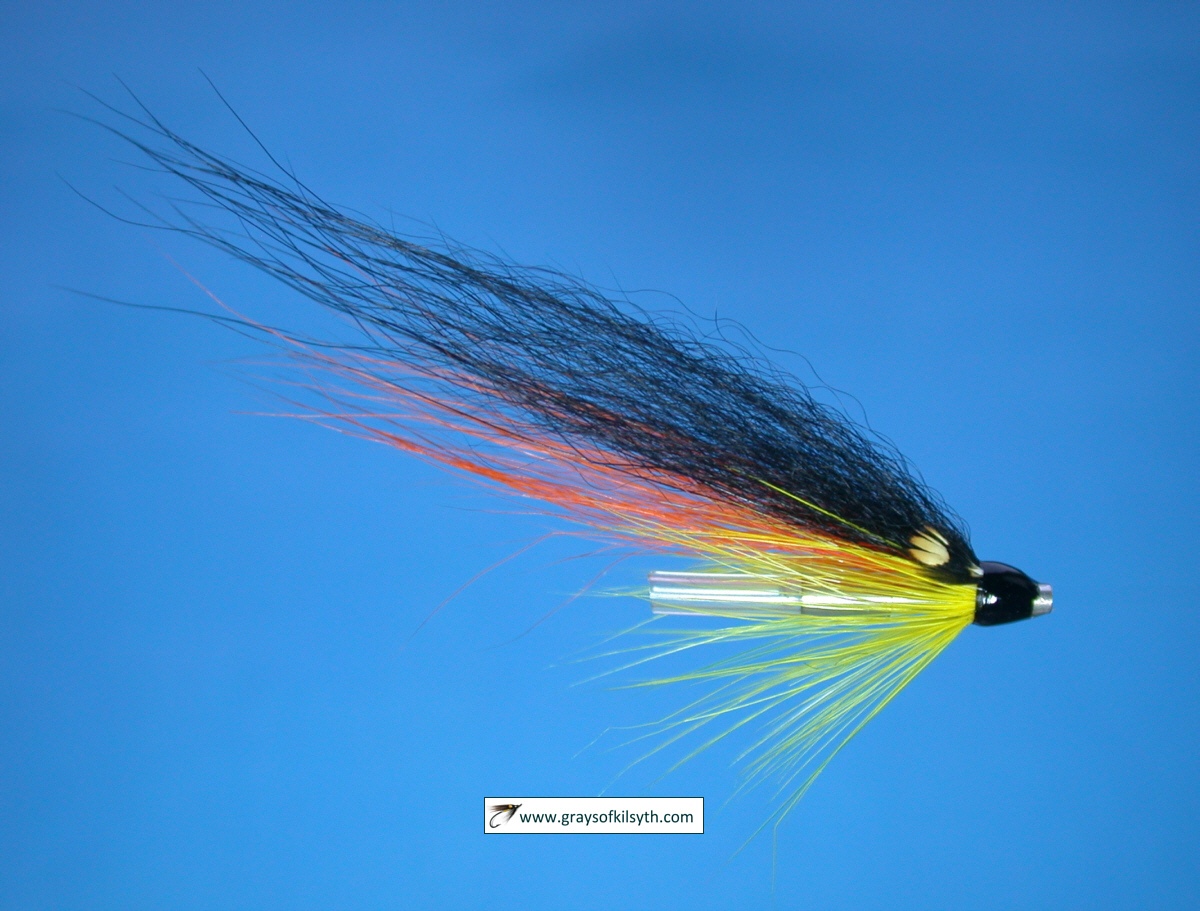
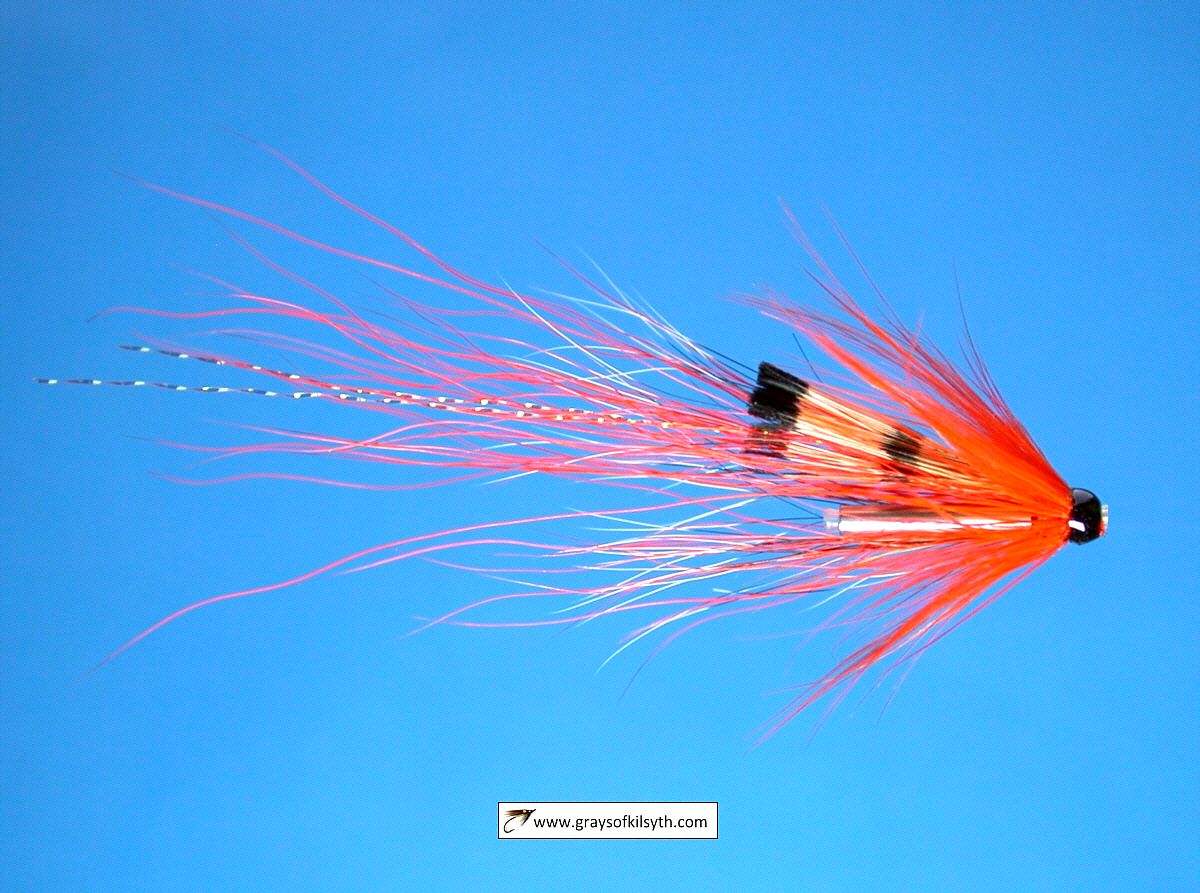
The
Needle Tubes recently
developed by
Grays of Kilsyth offer, I
think, the best of both worlds.
Made from ultra slim stainless
steel tubing, the type used in
the manufacture of hypodermic
needles, they have an outside
diameter of only 1.5 mm and are
available in lengths from 10 mm
to 40 mm.
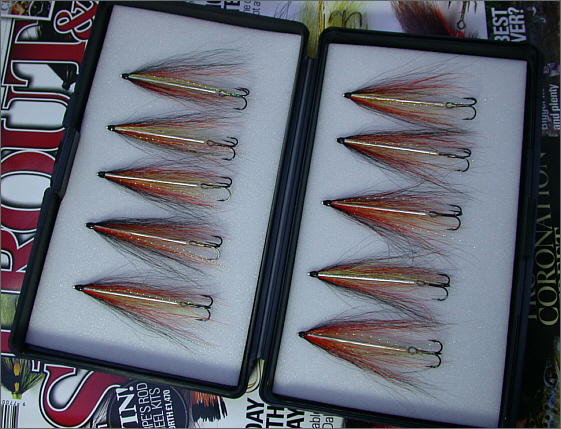
Needle Tube Flies
The
needle tube offers the
following advantages over the
Waddington lure and an
additional option for those who
like tube flies for salmon, sea
trout and steelhead fishing:
-
With a diameter of only 1.5
mm they are as slim as a
Waddington shank and much
slimmer than conventional
tube flies. (Only a
Needle Fly , dressed on
a sewing needle, has a
slimmer body)
-
Made from plastic lined
stainless steel, the needle
tube is comparable in weight
to a Waddington lure, while
being lighter than a copper
or brass tube and heavier
than an aluminium or plastic
tube.
-
The needle tube, held in a
suitable
tube fly vice, is more
easily dressed than a
Waddington shank.
-
The polished stainless steel
needle tube may be left
undressed to create a simply
dressed, slim, silver bodied
lure or it can be dressed in
the traditional manner.
-
The hook - treble, double or
single, barbed or barbless -
can be easily changed when
damaged or to suit
circumstances.
-
A silicone hook link holds
the hook securely in place
while offering great
flexibility and minimum "leverage".
The needle tube, then, offers
the slimness of the Waddington
lure with the simplicity and
convenience of the tube fly.
Further Reference
Tube Flies
Needle Tube Fly Fishing
Fly Tying Tubes
Grays Needle Tubes
Tube Fly Vise
Snaky Tube Fly
See also
How to make a knot guard (or swing tube) for a Free Swinging Tube
Fly Hook
|
|
|