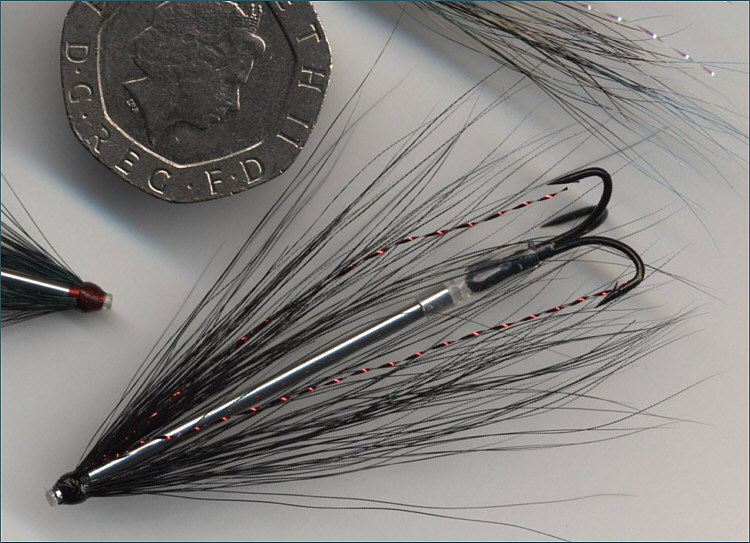
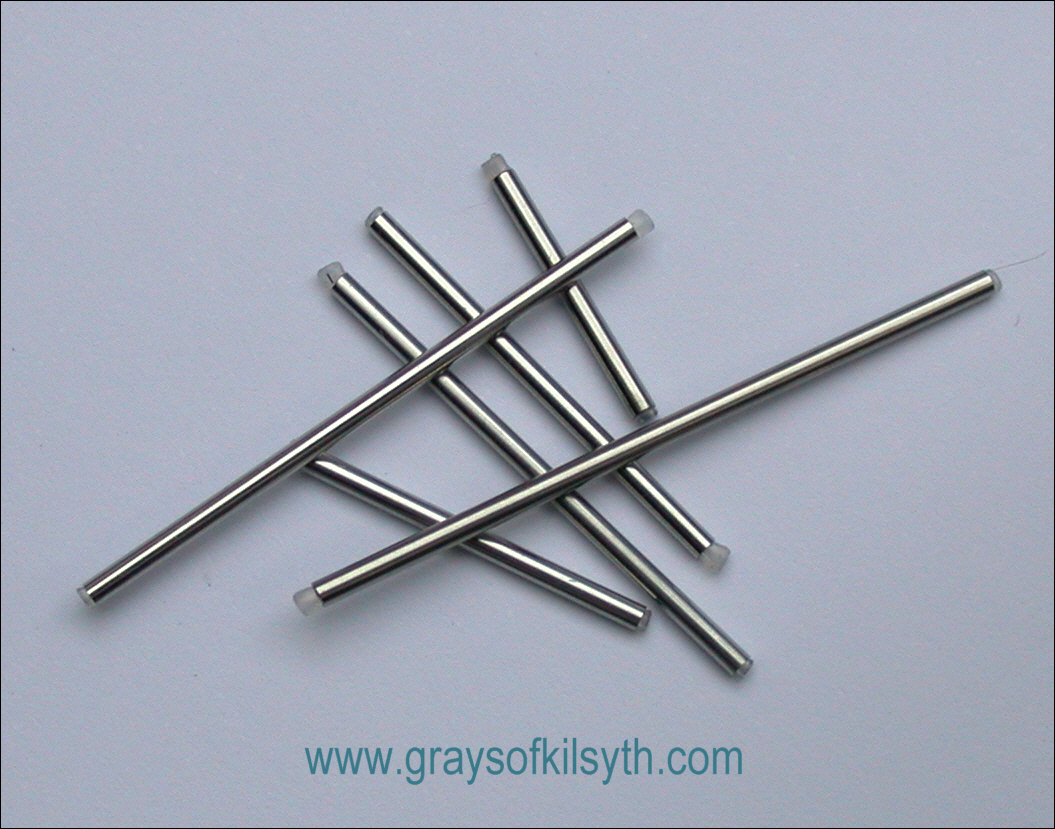
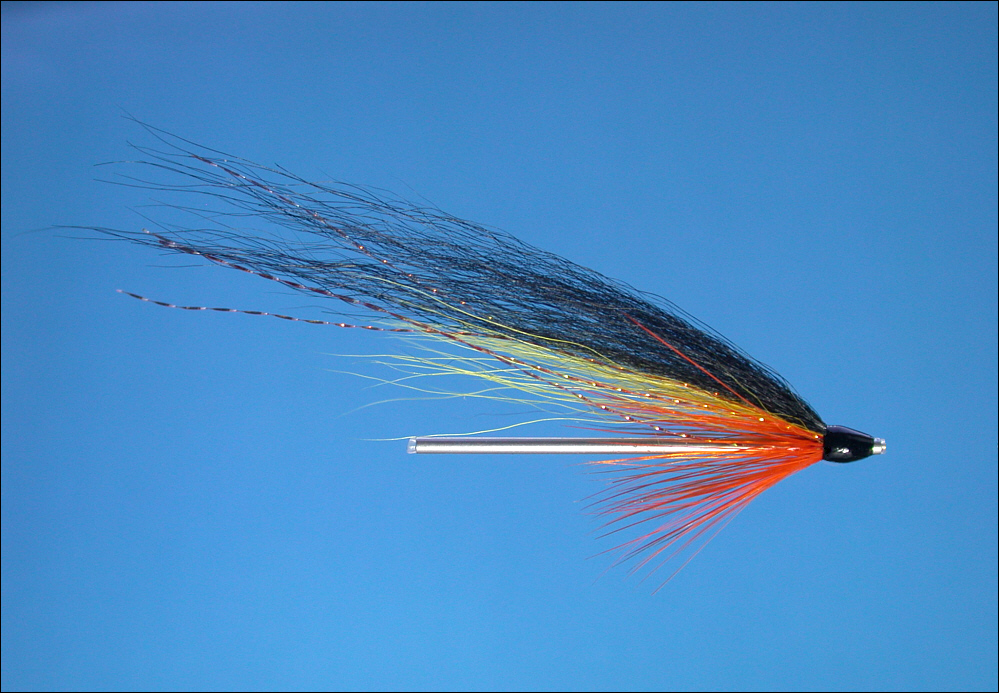
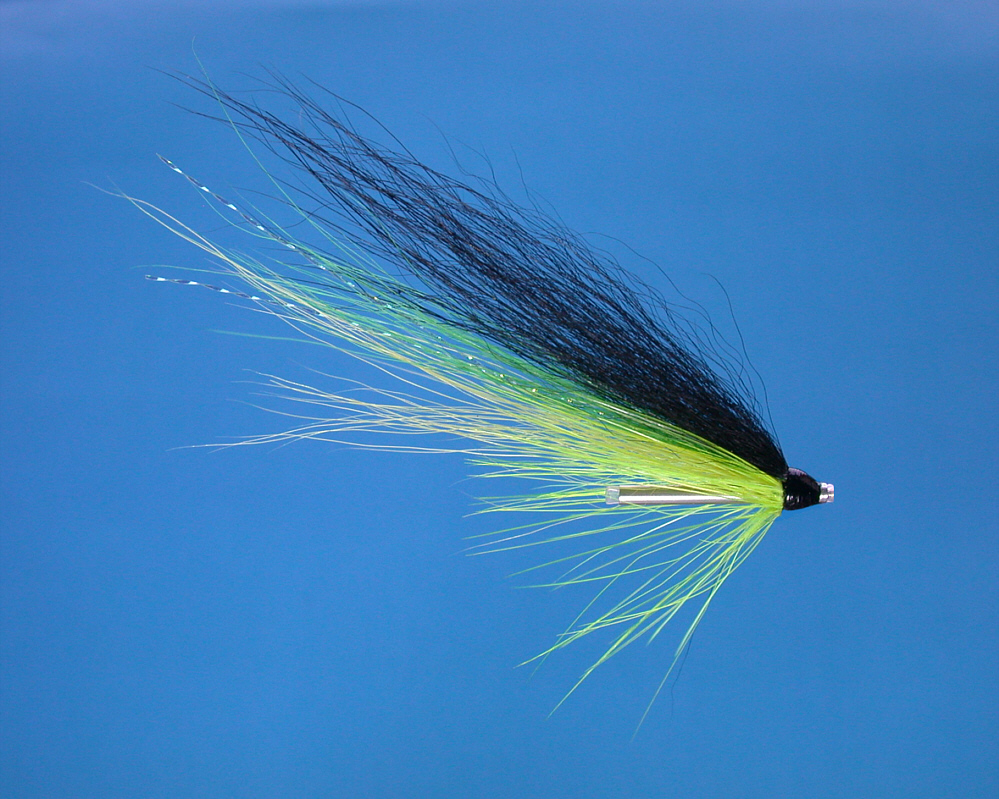
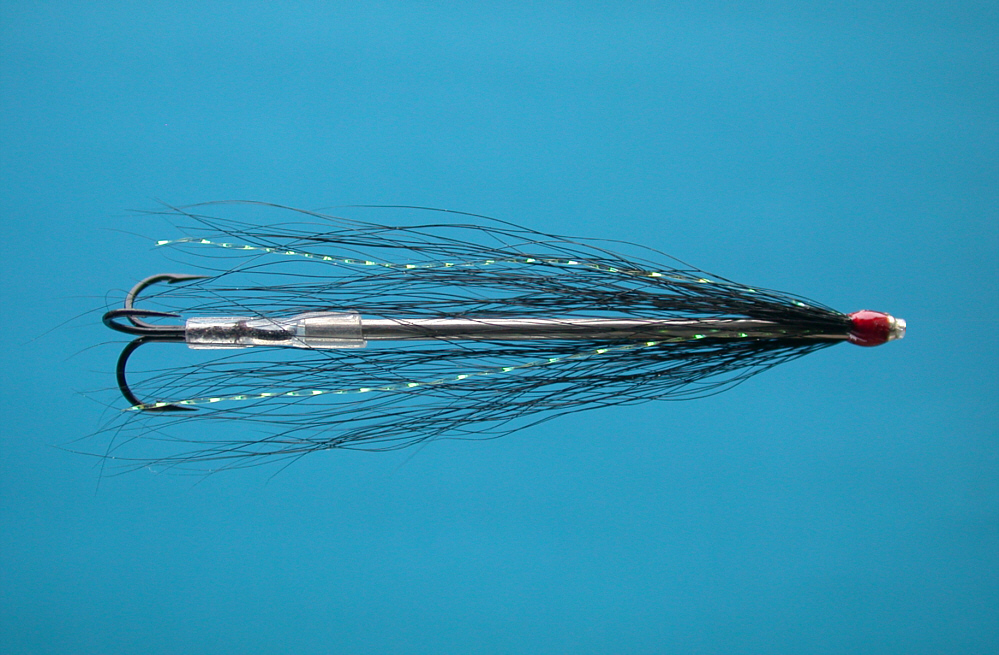
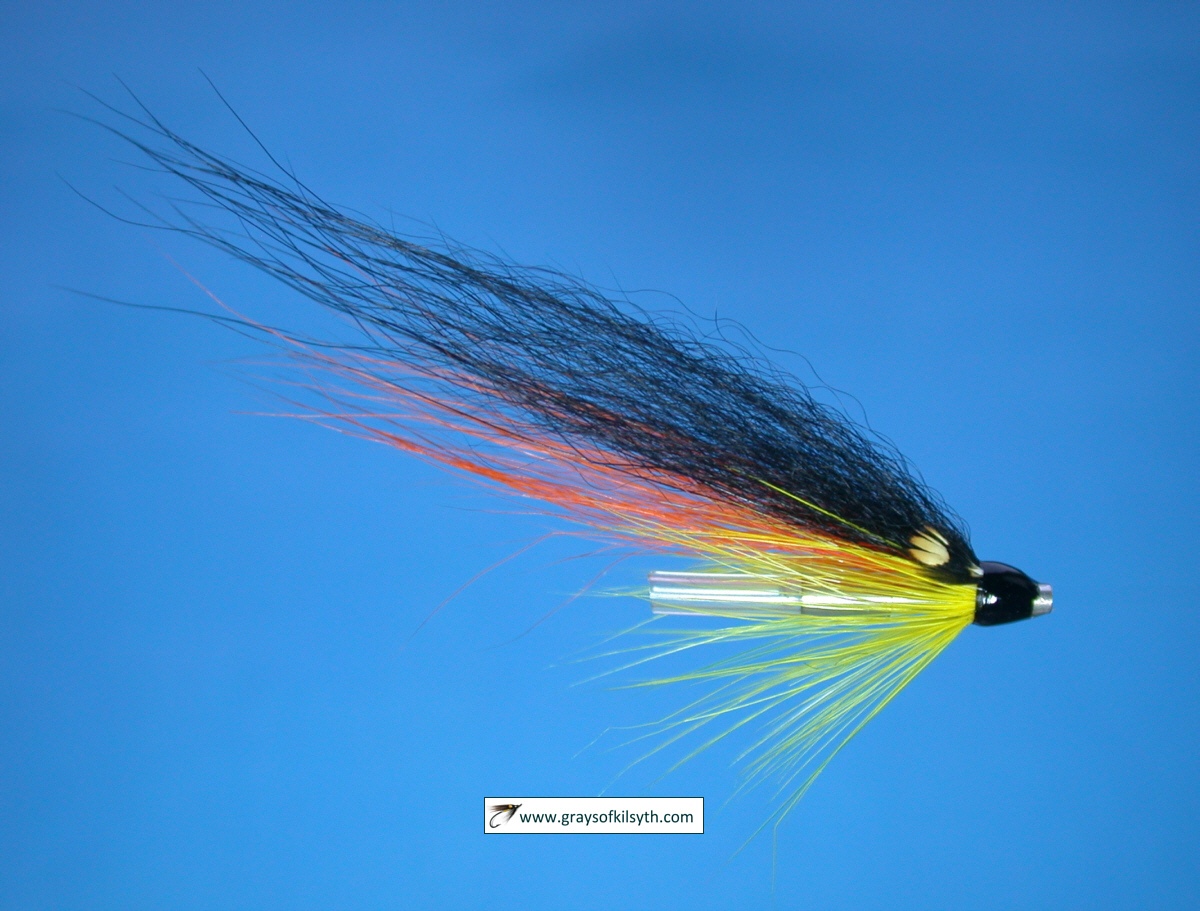
Probably the finest salmon fly tying tubes ever made!
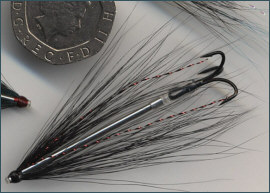
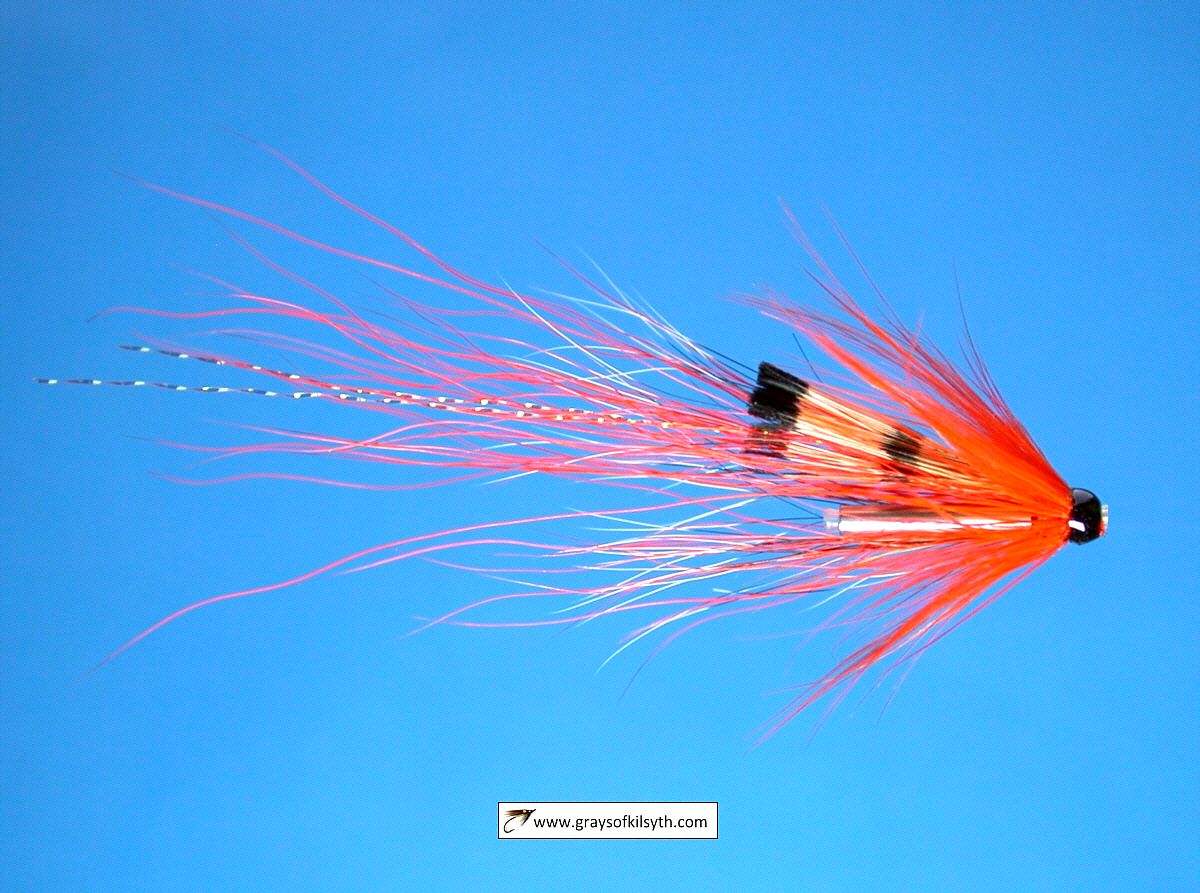
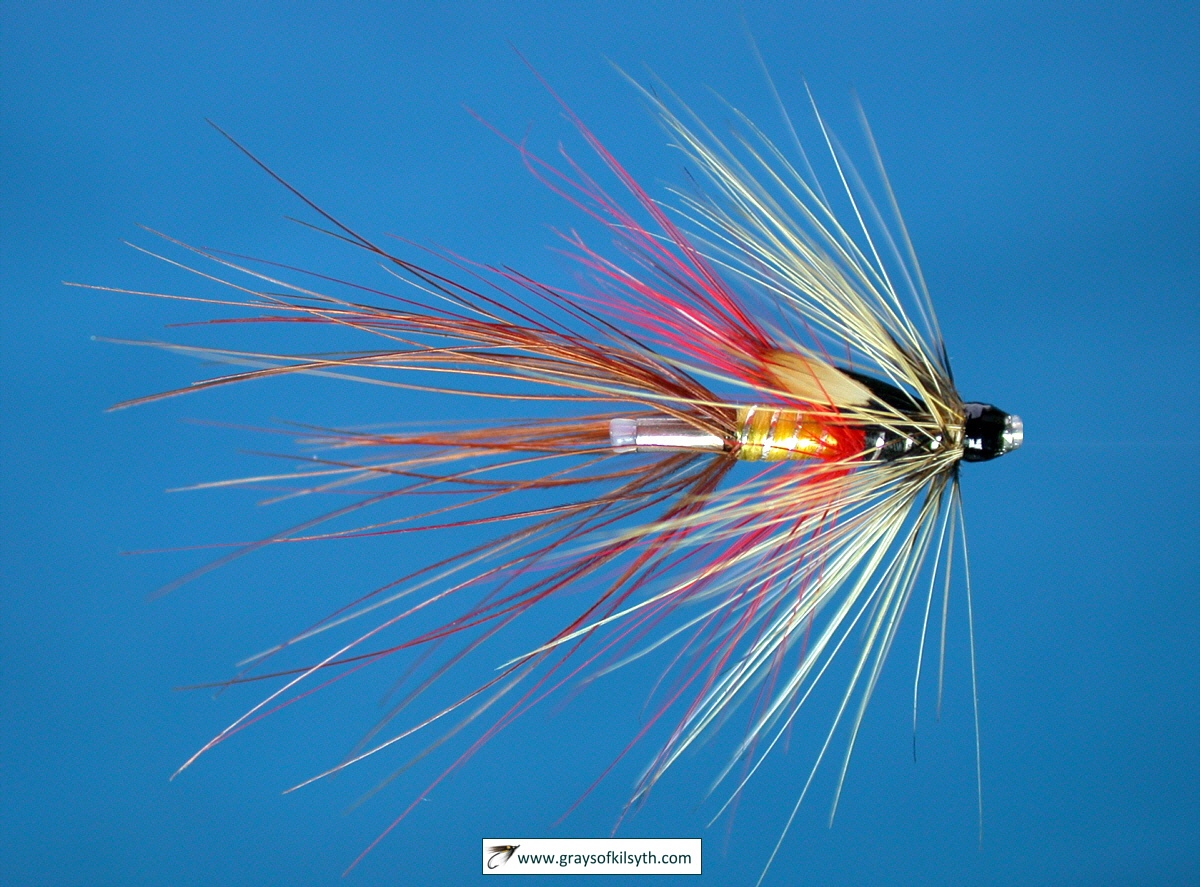
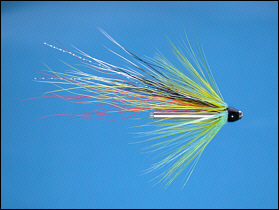
Stainless steel tube 1.5mm diameter
Over the years, there have been many
innovations in the world of fly tying, particularly in the design of
flies and lures for salmon fishing. We might include in this flies aimed
at both Atlantic and Pacific salmon and at Steelhead in North America,
together with flies for salmon and sea trout fishing in Europe,
particularly in the U.K., in the Scandinavian countries, and in Russia.
Recent years have seen the development of many and varied innovative
designs. Whether his chosen quarry is the salmon, steelhead or sea
trout, today's fisherman has a great many weapons in his armoury,
ranging from simple single, double or treble hooks, short or long in the
shank, barbed or barbless; snakes and needle flies; coneheads, bottle
tubes and turbo discs. The tube fly has long been a favourite of many
fly tyers, available in a variety of materials, such as plastic,
aluminium, copper and brass, allowing flytyers to make tube flies in a useful range of
lengths and weights to suit most river conditions. Another great
advantage of the tube fly is its durability, as the hook, whether
single, double or treble, can be easily replaced when damaged.
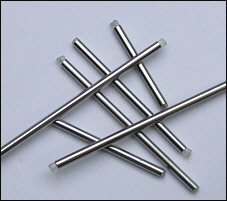
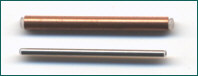
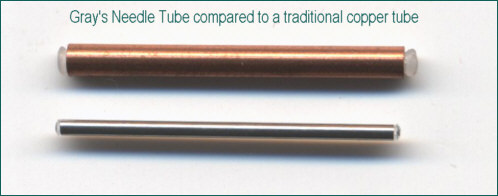
Grays's Needle Tube compared to a
traditional copper tube
I am a great fan of very slimline
fly bodies, particularly for sea trout fishing at night but also for
salmon. For many years now, I have used
needle
flies, the slimmest of all flies. I
later collaborated
with Dave Wallbridge in developing
micro
tube flies,
undoubtedly the thinnest metal tube fly ever devised, with an outside
diameter of 1.1mm (19 gauge stainless steel tubing) or less than 1mm (20
gauge stainless steel tubing). Because it was impossible to line such
slim tubes with the traditional plastic liner and still allow room for
the leader to be passed through the tube, our early micro tubes made use
of heat shrink tubing to shield the nylon leader from the sharp tube
ends and very effective they were, too, if a little unconventional.
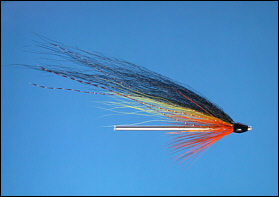
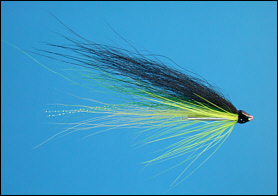
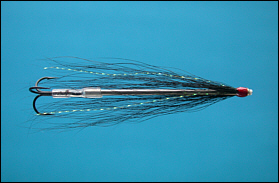
see more photographs of
Needle Tube Flies
Subsequent online forum discussion of the
possibilities presented by our stainless steel micro tubes prompted renewed efforts to
develop slim stainless steel tubes of the more conventional kind,
employing a
traditional plastic liner, with a view to making them available to fly tyers
worldwide. Reverting to the traditional lining method would not, of
course, produce such slim tubes as the earlier micro tubes but the
resulting Needle Tubes, developed and made in Scotland by Grays of
Kilsyth since 2008, come pretty close, with a minimum
outside diameter of 1.5 mm., slimmer than any other
commercially produced lined fly tying tubes. Being made from polished
stainless steel, the kind used in the making of hypodermic needles, they
sink more readily than aluminium tube flies but fish a little higher,
and more attractively, than the heavier copper and brass tubes. Needle
Tube flies would have a comparable sink rate and similar slim profile to
flies dressed previously on Waddington shanks, but with the important
benefit that the hook is easily changed on the needle tube fly. Needle
tubes are also much easier to dress than Waddington or snake lures.
Fly Fishing & Fly Tying Magazine Review
In his recent review of August 2011 Magnus Angus wrote of Gray's
Needle Tubes:
"
... slender, gleaming tubes; utterly functional and very
tempting, these are extraordinary in a couple of ways - slimmer
than any straight tubes I have seen for sale - stainless
steel which is both hard to find and hard to cut.
...
flies tied on these tubes are not like heavy bulky conventional
tubes, these are light and sleek, cast easily and can be
controlled by a sink-tip or poly-leader. Want to fish deeper, use a faster sinking line. In other words these are
modern tubes for modern fishing techniques which emphasise
easier casting and employ sophisticated modern fly-lines to
determine fishing depth.
As a fly tyer the proportion, neatness and finish of these tubes
and the neat finish I can achieve on them appeals directly to
the satisfaction I get from fly tying. And stainless steel tubes
are about as tough as fly tying tubes get - so my carefully tied
flies should fish a little longer. Then as an angler, the
slimness of these tubes makes me think of clear water and sea
trout. The shorter tubes seem ideal for those wee speck-like
flies for low flows, longer tubes for faster water or fishing
into the dark ..."
|
Gray's Needle Tubes, made in
Scotland by Grays of Kilsyth, are now
available online
in two
diameters and lengths ranging from 10mm to 40 mm. To be dressed,
these very thin tubes are best held in a dedicated
Needle Tube Fly Vise.
See also
Tube Flies
|
A few related pages
|
|