Sea Trout Fishing - Sea Trout Flies
A guide to sea trout flies for use mainly at night on
British Rivers
The braid of supple silk unfurls upon the
darkening river
The teal winged fly with hackle blue and
subtle glint of silver
Dressed long ago with special care upon a
winter’s eve
Swings steady o’er the shingle bed in
slow and deft retrieve
Having considered where and when to begin
our sea trout campaign, let us now look in a bit more
detail at the flies we might present to
them
– the “what” and “how” if you like. Sea trout may be
caught on a great variety of flies, from singles as
small as size 16 to long lures of two inches or more. We
all have our favourites. It is worth remembering,
though, that sea trout cannot distinguish colours at
night any more than we can. Different colours will
appear, both to us and to the sea trout, as varying
shades of grey, so we need not worry too much about the
colour of our sea trout night flies, except for their
tonal qualities. Incorporating a splash of colour in our
sea trout flies will, of course, do no harm and, in
addition to creating some variation in shade, tone and
contrast,
will provide a useful variety if used in daylight. The
night flies in our sea trout boxes should certainly be
varied, but not so much in colour as in length, bulk,
weight, density, mobility, tonal quality
and the degree to which they reflect light. It might be
reasonably argued that a simple black fly, or perhaps a
black and white fly, dressed on a silver hook or tube,
will be as effective as anything for sea trout at night.
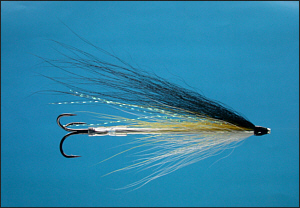
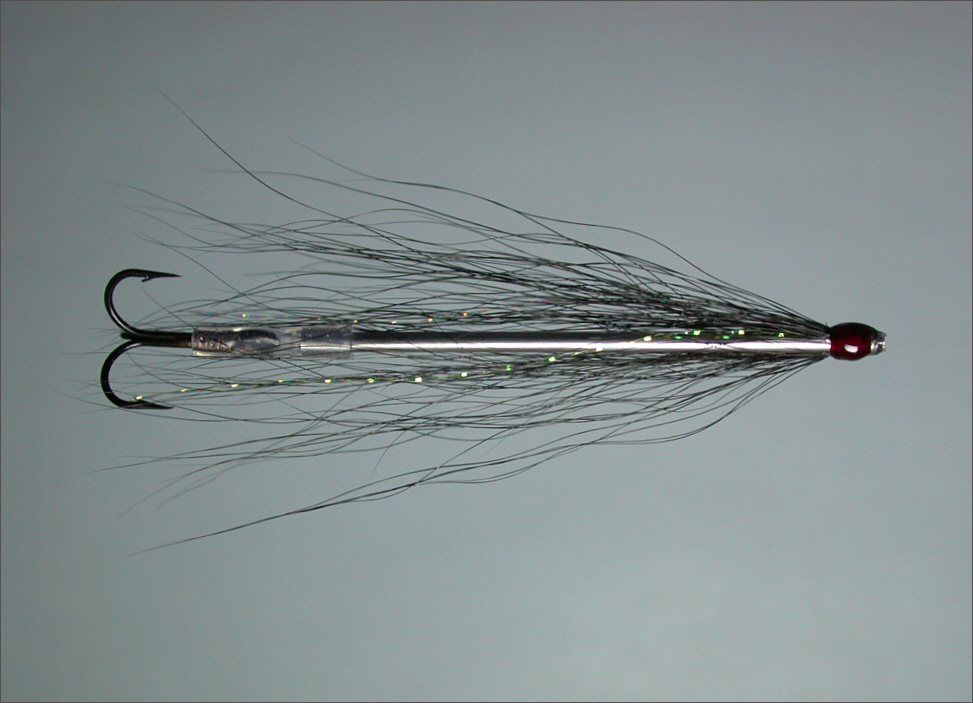
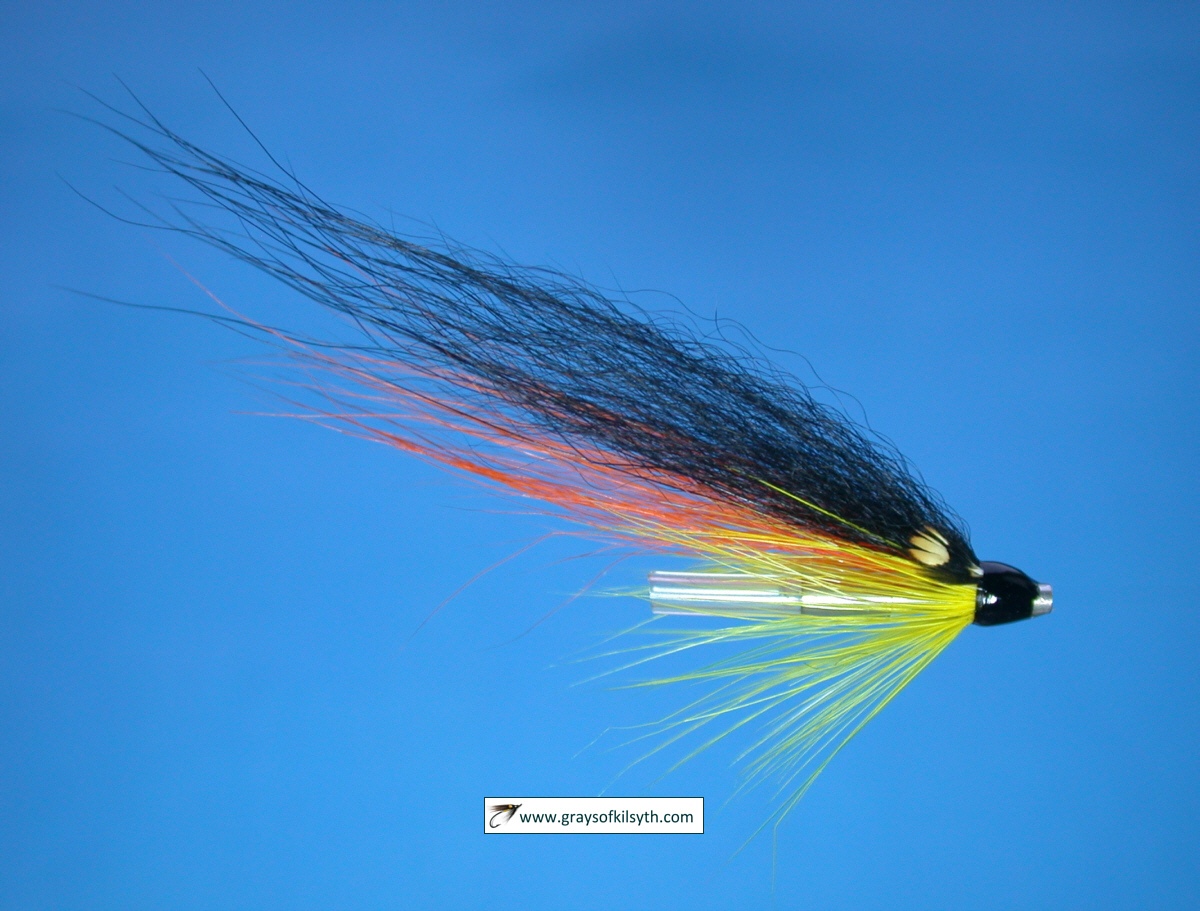
Last season, apart from one taken on a spinner, I took
all my sea trout on a simple tube fly, dressed with
nothing more than a black squirrel hair wing and a
couple of strands of Krystal Flash, similar to that
shown below.
I would suggest that the size of the fly
is far more important than the colour. As a general
rule, I fish smaller flies early in the night and longer
flies later when the night is darkest, but this will
depend on conditions, too. A higher river or colder
night might suit a larger fly.
I like to keep things as simple as possible. I generally
fish for sea trout only at night. I rarely fish anything
smaller than a size 10
single or longer than two and a
half inches, the longer lures dressed on needles or
tubes. For flies up to about an inch long, I tend to use
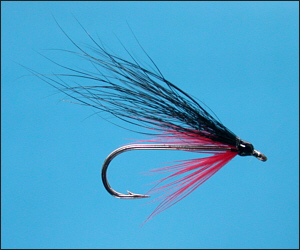
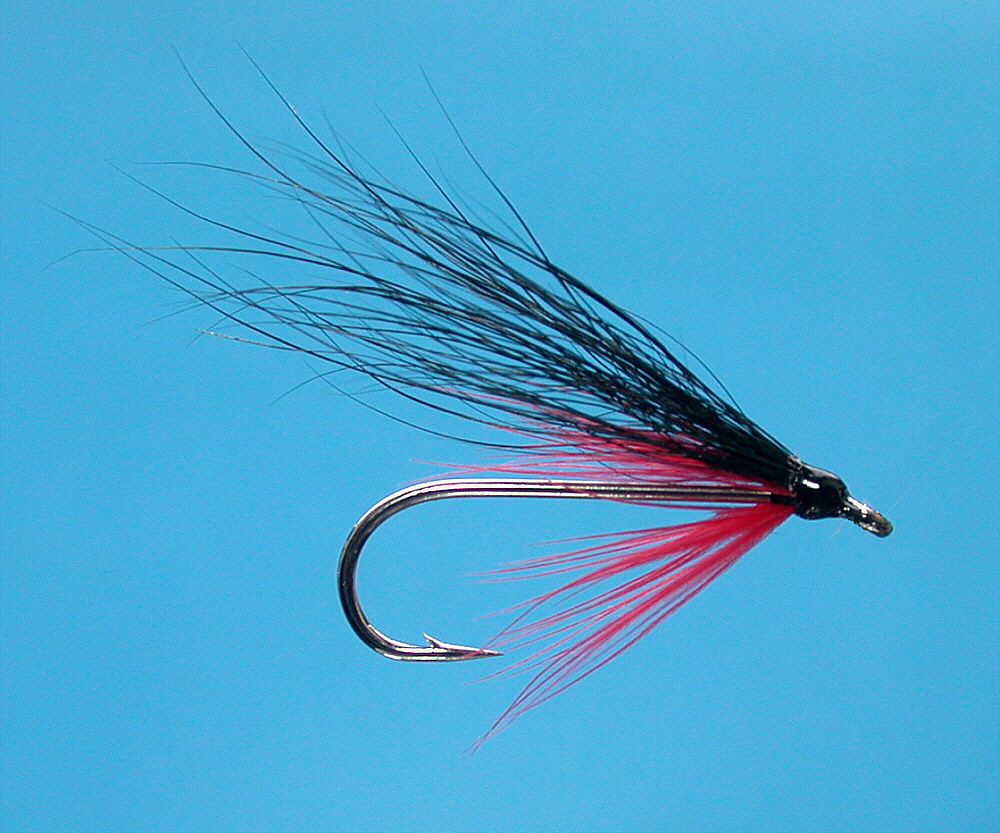
singles. My favourite hooks are Partridge
Captain Hamilton in size 8 and Partridge Saltwater
Perfect, also in size 8. The Saltwater Perfect hook is a
well made hook, slightly longer in the shank than a
standard hook and with a nice silvery black nickel
finish. With no body dressing, it makes for a very
simply dressed, fish imitating fly such as that shown to
the right.
My approach to sea trout fly fishing and
fly tying has been influenced very much by some of the
ideas and writings of Falkus.
He expressed the firm belief that the most effective sea
trout lure would be one which, rather than setting out
to imitate a creature on which the sea trout had
recently preyed, created a tenuous “impression” of such
a creature, a tantalising reminder to stimulate an
instinctive response. For a fish which was not actively
seeking food while in the river, indeed one which had no
need for, and little interest in, food, this made a lot
of sense to me. A slim, translucent, mobile, sparsely
dressed lure, with a bit of glint, seemed to me to be
the way to go and this basic objective of creating an
impression rather than an imitation has since been
reflected in most of my flies, not only for sea trout
but also for other species.
It is often said that, colour aside, sea
trout have excellent night vision and can detect the
smallest of flies. Indeed, flies as small as size 12
may, at times, be fished effectively through the night,
particularly on a mild night.
Nevertheless,
on very dark nights, even in the clearest of water, a
lure with a bit of “presence” , perhaps a heavily
dressed aluminium or plastic tube, might sometimes be
needed to attract the attention of the sea trout, or,
more to the point, provoke a reaction, particularly in
those fish which have “gone down” late in the night. In
general, though, I would tend to select a lure (and fish
it in an appropriate manner and at an appropriate depth)
which represents, however tenuously, something the sea
trout is known to have eaten at some point: a slim,
silver bodied fly for a small fish, fished at various
depths; a bulkier, hackled pattern for a sedge or moth,
fished on or very near the surface. At times, when sea
trout are at their most active, it would seem that they
are not particularly fussy and will happily take a wide
variety of fly types, fished in various ways at various
depths. Nevertheless, it would seem logical, most of the
time, to offer them a tenuous representation of
something which they will recognise as food, behaving in
a manner which the sea trout might perceive as “normal”.
For me this generally means fishing a fly which
represents a small fish (slim and silvery) or one which
represents an insect of some kind (bushy hackle). Early
in the night I may fish two flies, one of each type,
with the
bushier,
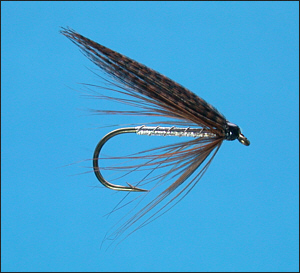
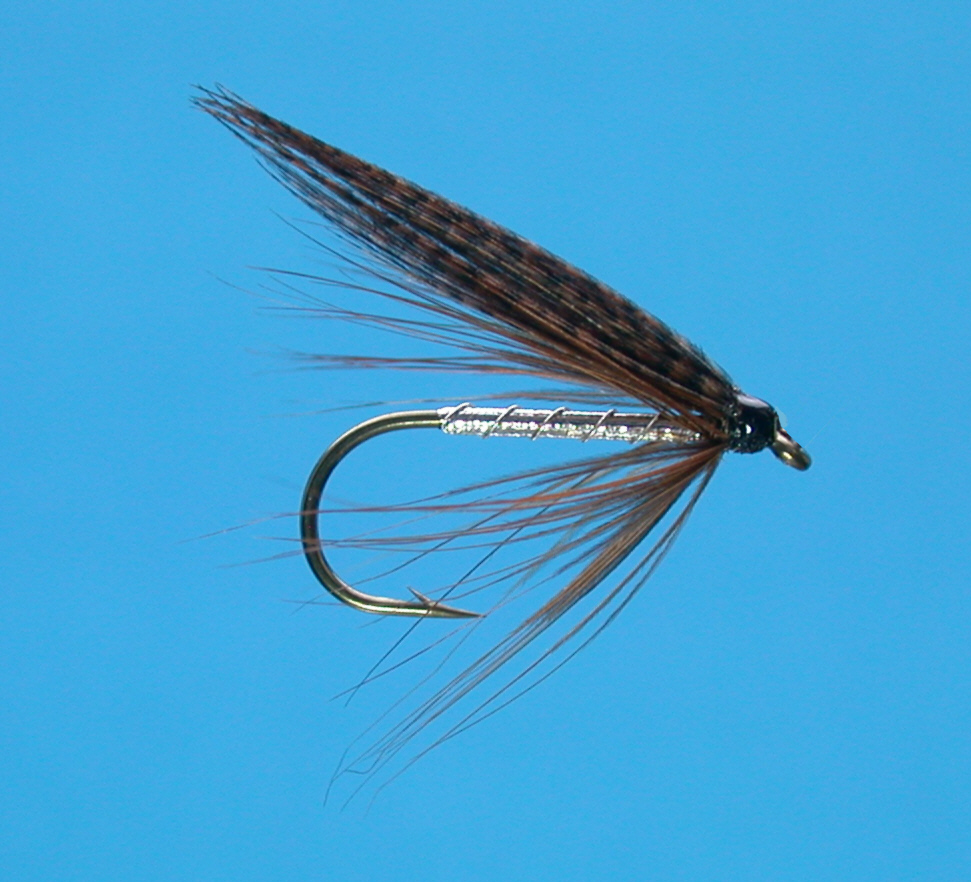
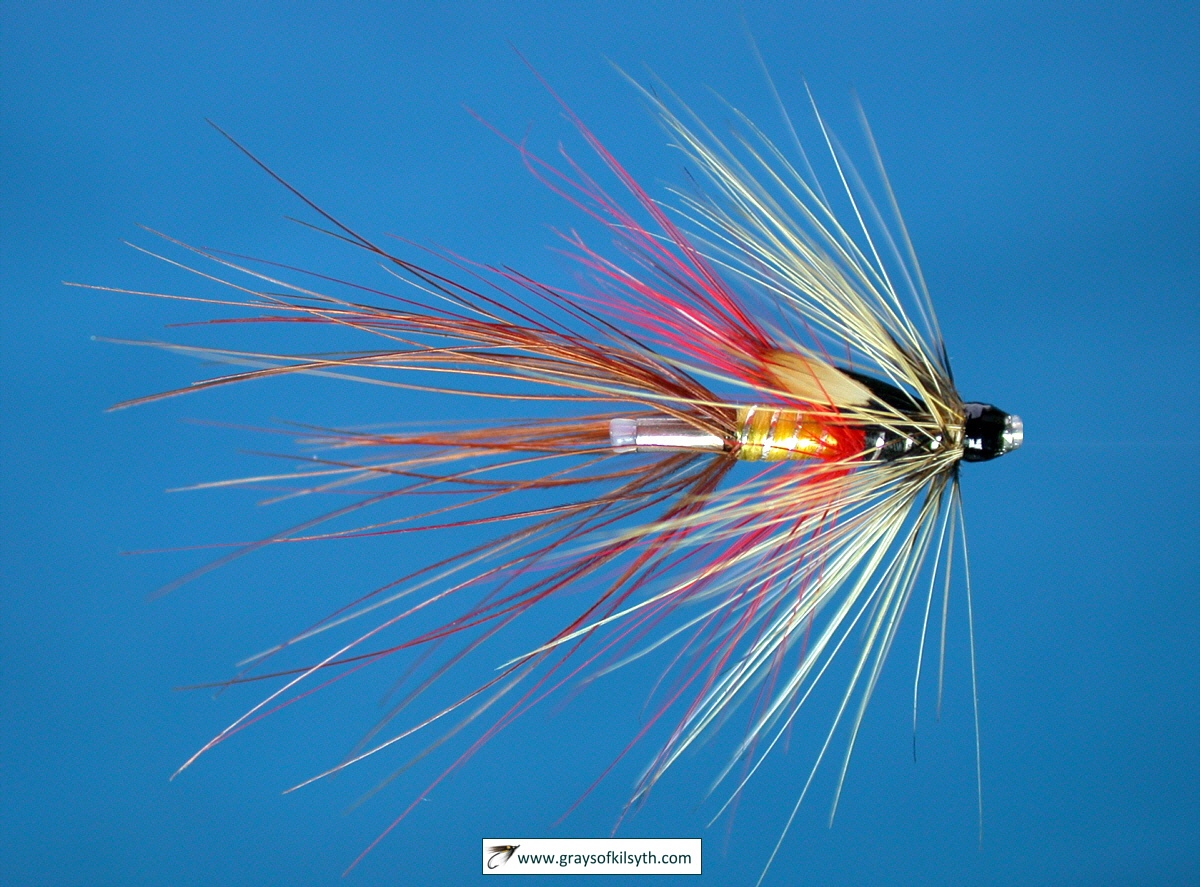
insect-like fly as the dropper. Often I will hedge my
bets and fish an all-purpose pattern which, when tied on
a size eight hook, might be taken as either fish, insect
or shrimp, for example a fly with a pearl or silver
body, brown hackle and mallard wing.
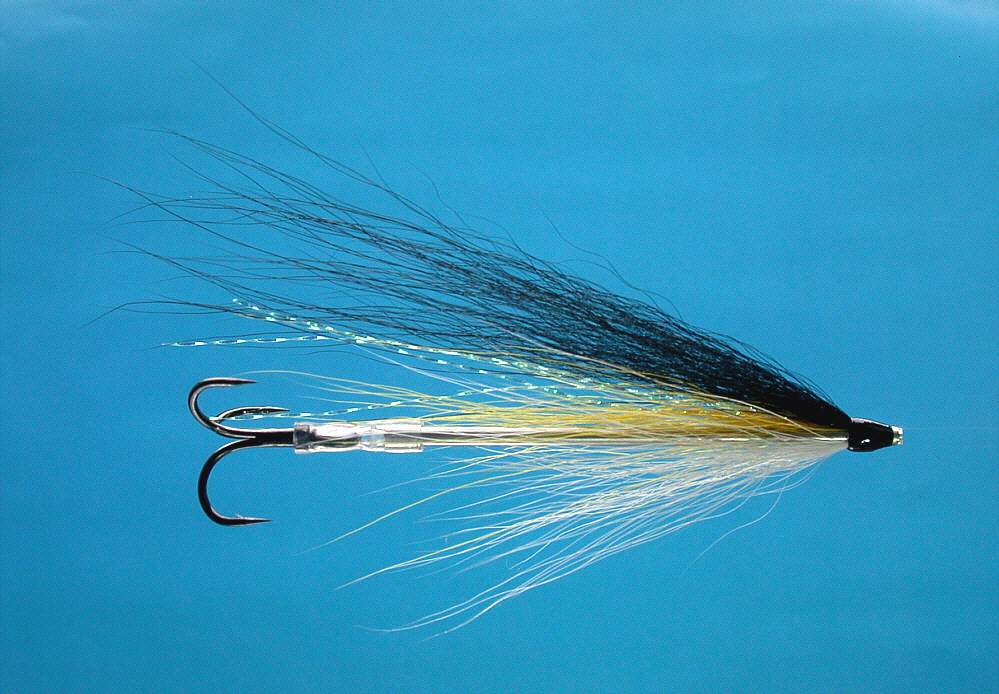
Later in the night, when it is properly dark, more often
than not I will cut off the single on the tail and
replace it with a
needle fly
(which I devised in the nineties for late night sea
trout fishing on the River Earn in Perthshire - see
Trout & Salmon magazine article "Needles for Sewin",
John Gray, September 1999) or
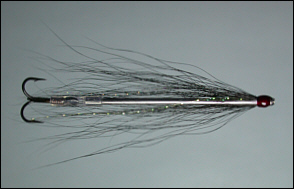
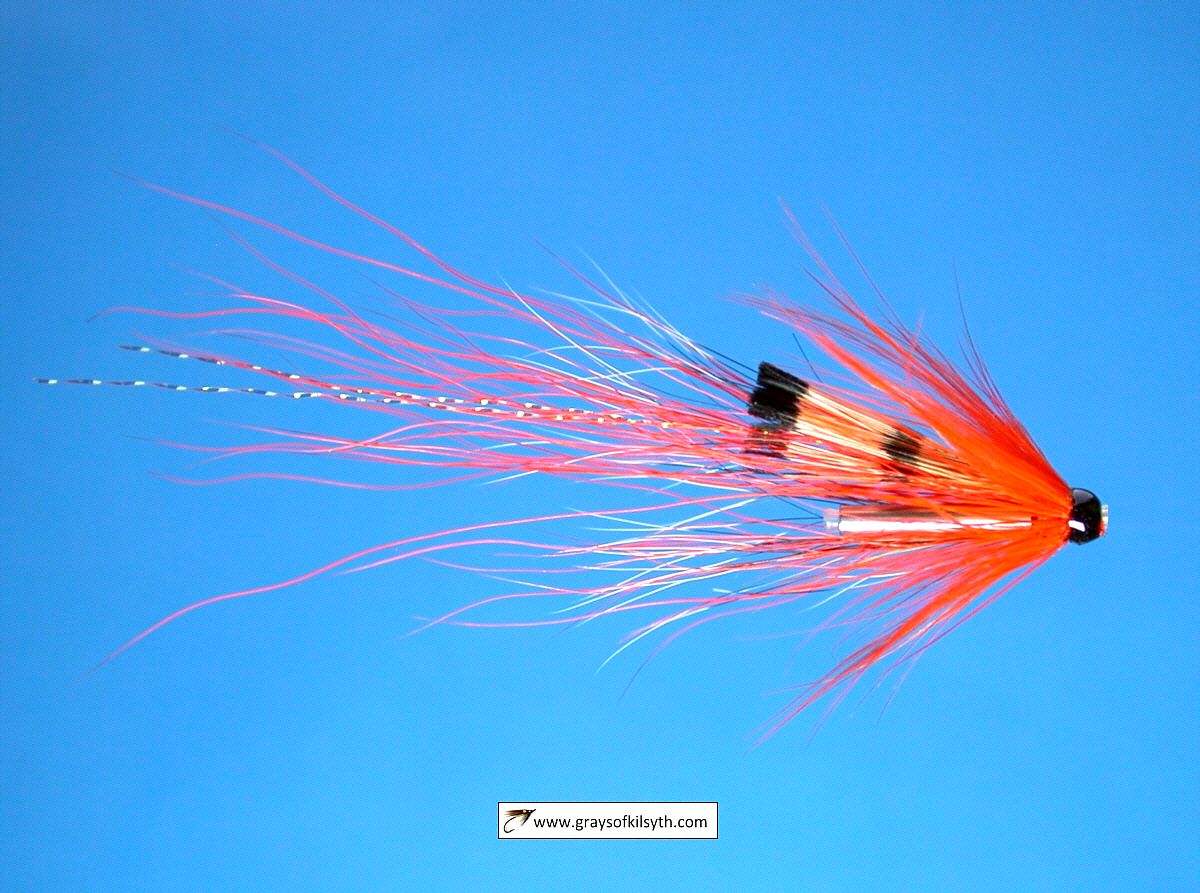
needle tube fly, with an overall
length between one and a quarter and two inches,
sometimes retaining a single on the dropper, sometimes
dispensing with the dropper and fishing the longer lure
on its own. If the night is very dark, I might use a
needle fly or tube in a larger size, up to perhaps two
and a half inches, clinging to the logic that this type
of long slim lure gives the best impression of a small
fish or sandeel.
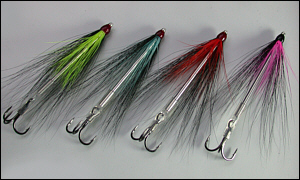
Like many sea trout fishermen, I like tubes for night
fishing. Flies for sea trout can be dressed on all kinds
of tubes, home made or otherwise, in plastic, aluminium,
brass, copper, steel etc., allowing us to make lures
of
all shapes, sizes and weights each for a different
purpose and for fishing on or near the surface, often in
the early part
of the night, or near the river bed,
usually later in the night, although there are no hard
and fast rules and practices will vary greatly from one
river to another and from one part of the country to
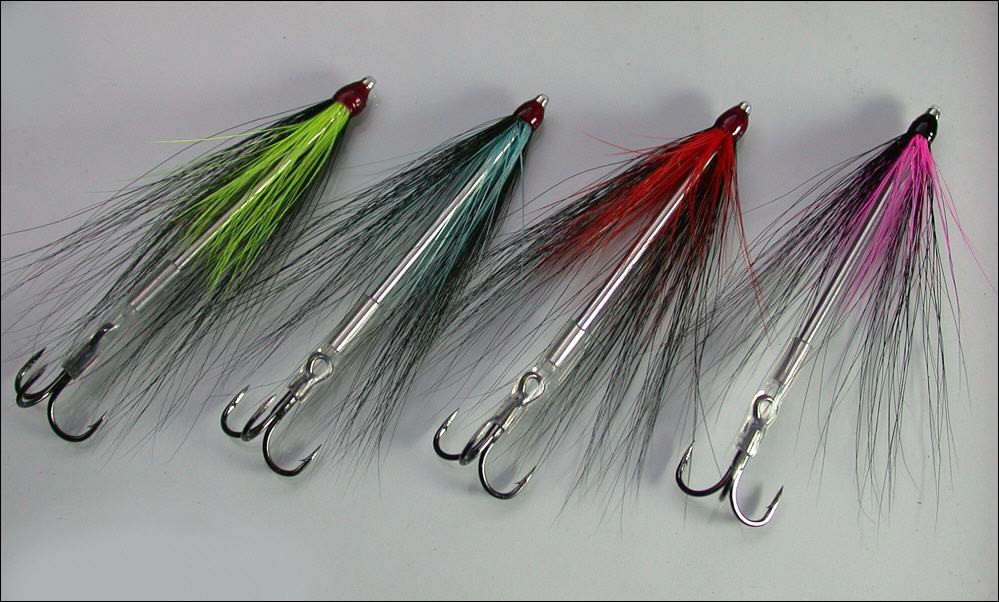
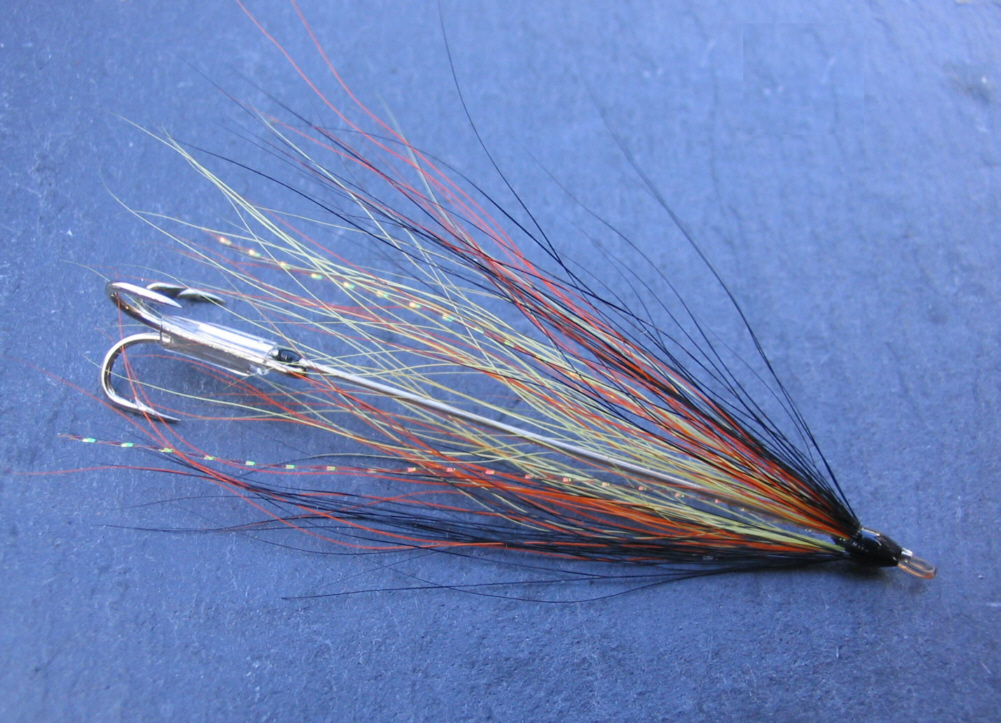
another. My favourite sea trout lures
are now dressed very simply, in a variety of lengths, on
Needle Tubes, ultra slim stainless steel tubes with an
outside diameter of only 1.5 mm. [see Trout & Salmon
Magazine articles May 2008
(John Gray); April 2009 (Geir Kjensmo); June 2010 (John
Gray)] Being made from polished stainless steel, the
kind used in the making of hypodermic needles, needle
tube flies sink more readily than aluminium tube flies
but fish a little higher, and more attractively I think,
than the heavier copper and brass tubes. Needle Tube
Flies would have a comparable sink rate and slim profile
similar to flies dressed on Waddington shanks, but with
the important benefit that the hook is more easily
changed on the needle tube fly. I have also found tubes
to be much more easily dressed than Waddington or snake
lures. While on the subject of flies, no
list of sea trout lures would be complete without
mention of the surface, or wake, lure, which, in one
form or another, can be extremely effective at times on
some rivers, particularly, it would seem, in Wales.
The sea trout are attracted, not so much
by the lure itself, but by the wake made by the lure on
the surface. The floating lure, which may be fashioned
out of virtually anything that floats, foam or deer hair
for example, even bits of cork or wood, is cast out into
the darkness and either hand-lined in or allowed to
swing round on the current, creating that all important
wake, which the sea trout may, at times, find
irresistible. I should say that I have had very limited
success with such lures myself. Perhaps our Scottish sea
trout are overly suspicious of such outlandish
contraptions! ....
next page
See also:
|