|
Page one
Favourite Flies for the River Clyde
____________________________________________________
ORANGE QUILL
Body: Orange, gold rib
Wing: Starling
Hackle: Ginger
____________________________________________________
RED SPIDER
Body:
Peacock quill, peacock herl at the thorax or at the shoulder
Hackle:
Red
____________________________________________________
KITE’S IMPERIAL
Tying silk is purple. Wind the silk to
the bend and tie in the tail whisks, greyish-brown hackle fibres for the Spring,
honey dun later in the season. Now tie in a length of fine gold wire and four
undyed heron primary herls. Twist the herls together and wind to form the body,
followed by the gold rib. The thorax is formed by taking the waste ends of the
herl backwards and forwards, as in a nymph pattern. Clip off the waste ends
after forming the thorax. Tie in a sharp honey-dun cock hackle and complete the
fly.
___________________________________________________
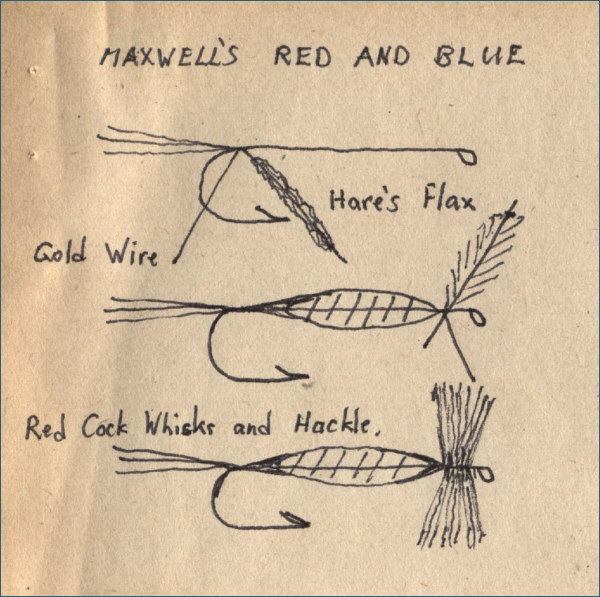
MAXWELL’S RED
AND BLUE
|
MAXWELL’S RED
Body:
Hare’s flax ribbed with fine gold wire
Hackle:
Hackle and setae are red cock. The red hackle should be dark and rusty-looking
MAXWELL’S BLUE
Body:
Hare’s flax ribbed with silver wire
Hackle:
Hackle and setae, medium to dark blue-dun cock hackle, a dark rusty blue
|
 |
___________________________________________________
BLACK GNATS
by M.A. Meddings
BLACK GNAT 1
Tying silk:
Black Gossamer
Body:
A brown quill taken from the middle herls of a peacock eye feather
Hackle:
Small bright black cock hackle
Wings:
Two slips from the lightest grey ring-dove’s feather, tied roof-style flat along
the body, the points protruding just to the bend of the hook
BLACK GNAT 2
Tying silk:
Brown gossamer
Body:
Made from close turns of the tying silk
Wings:
Two small slips of any light grey feather
Hackle:
Dark Coch-y-Bonddu, small
BLACK GNAT 3
Tying silk:
Black gossamer
Body:
Rabbit’s face ribbed with silk
Hackle:
Very small Coch-y-Bonddu
The rabbit’s fur must be from between the
eyes and nose which is of a black-brown colour. This, and this only, is the fur
to be used if the effectiveness of the fly is to be maintained.
These are three patterns, then, on which
I pin my faith, and three which I feel will leave the angler in no doubt as to
the effectiveness of artificial black gnats.
Next page
see also Scottish
Trout Flies |