Site Contents
Home
Salmon Fishing Scotland
Salmon - Where to Fish
Salmon Fishing Tackle
Salmon Fishing Tactics
Salmon Flies
Trout Fishing Scotland
Trout- Where to Fish
Trout Fishing Tackle
Trout Fishing Tactics
Trout Flies
Sea Trout Fishing Scotland
Sea Trout - Where to Fish
Sea Trout Tackle
Sea Trout Tactics
Sea Trout Flies
Fishing Maps of Scotland
Fishing Articles
Fly Tying
Fishing Photographs
Book of Flies
Fishing Diary
Where to Stay
Fishing Clubs
Fishing Tackle Shops
Fly Fishing Knots
Fishing Weather
Fishing Books
Salmon Recipes
Flies Online
Links
Sitemap
Grays Tube Fly Adaptor
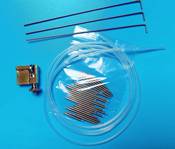
The new Tube fly adaptor from Grays of
Kilsyth complete with 25 assorted needle tubes
BUY NOW
|
Background
to Sea Trout Flies
The flies used in Scottish sea trout fishing are
many and varied. Trout flies, like the Peter Ross,
Butcher, Mallard and Claret and Teal Blue and Silver,
are popular on the loch but in a larger size, perhaps a size 8
or 10. These same sea trout flies will often be used at night on the river
along with modern favourites like the Silver Stoat and the
Medicine. Later in the night, larger lures tied on tubes,
Waddington shanks or needles may be used. In addition to some
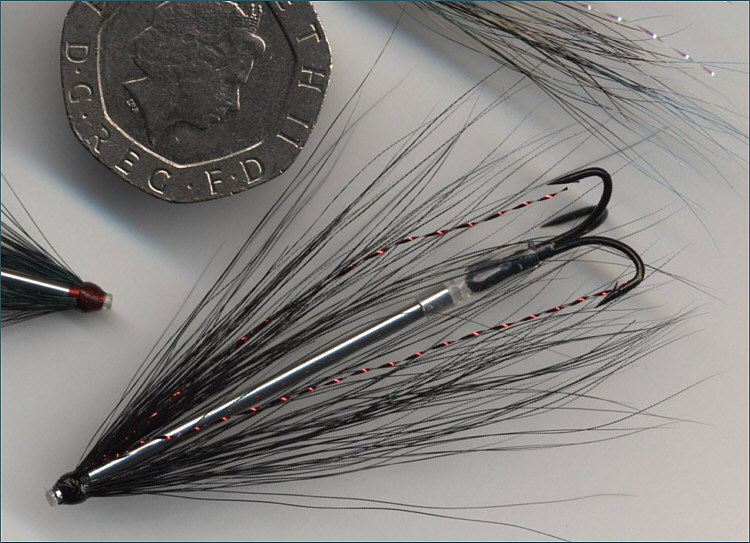
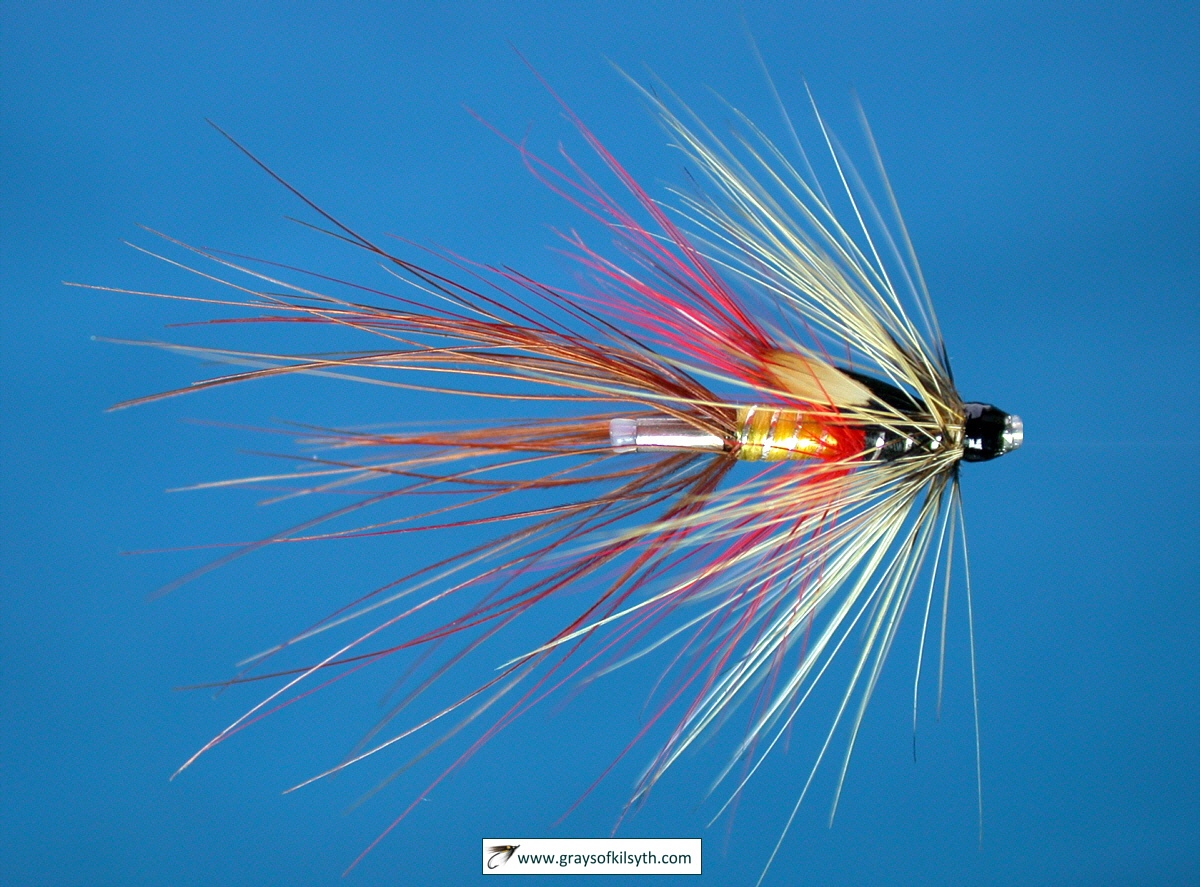
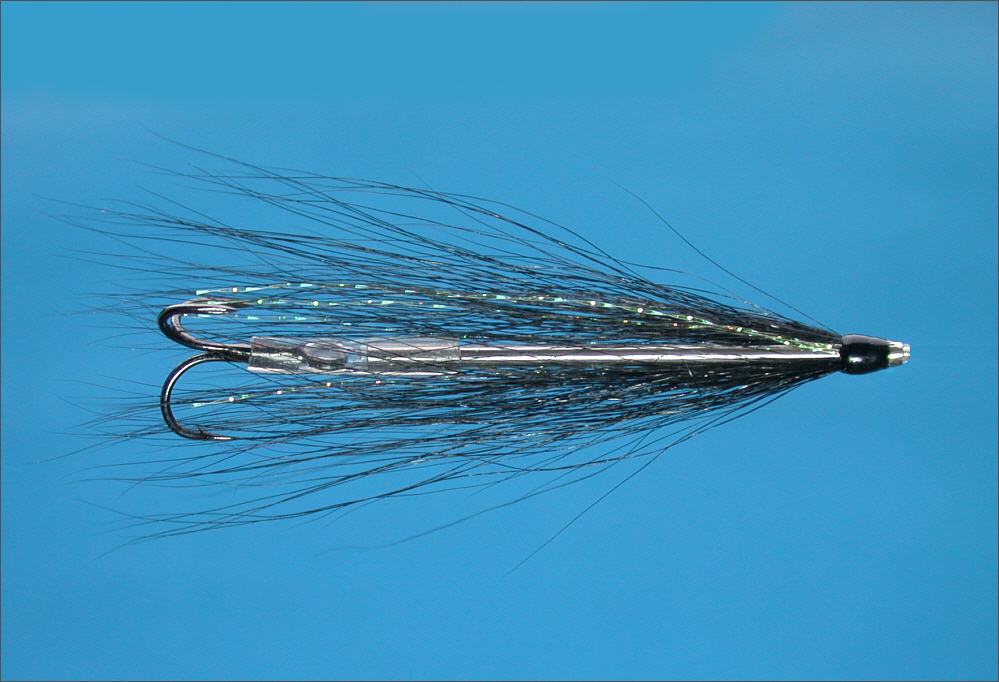
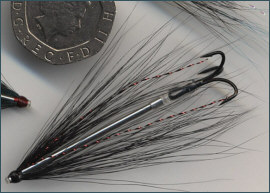
modern sea trout flies, such as the needle tube fly shown below.
|
 |
| |
|
Sea Trout Needle Tube Fly |
|
|
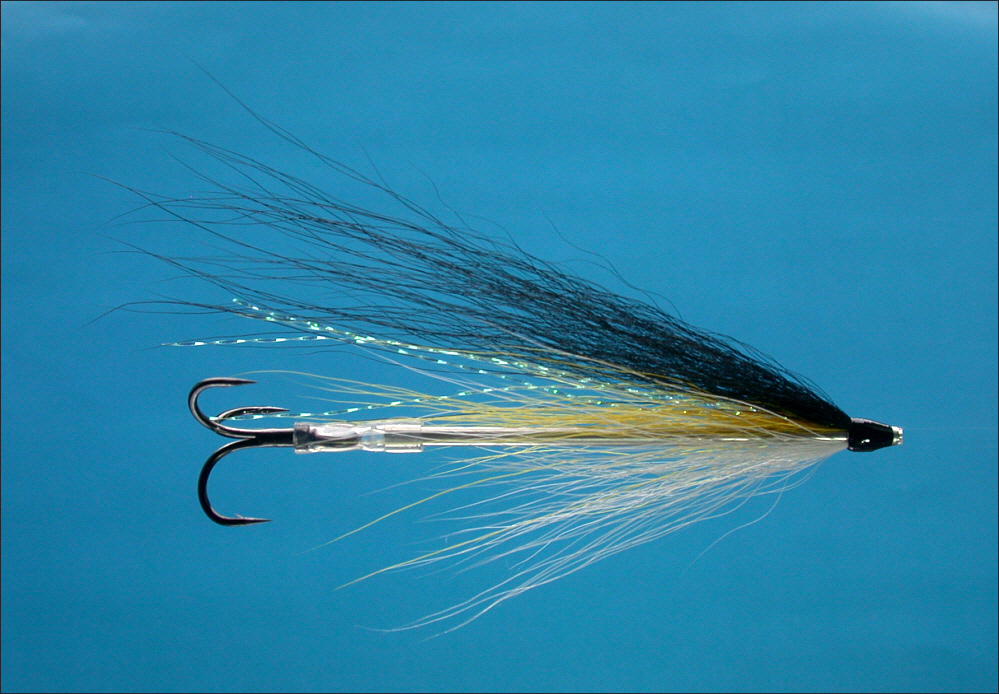
Sea Trout Needle Tube Flies
Gray's Needle Tubes were
developed primarily with sea trout in mind, although
they have proven very effective dressed as salmon and
steelhead flies also. Available in lengths
from 10 to 40 mm,
with an outside
diameter of only 1.5 mm, they
are the
slimmest commercially available lined metal fly
tying tubes ever made. They fish more deeply
than traditional plastic or aluminium tubes but are
more easily cast than the heavy copper and brass
tubes. Needle tubes are now available for the fly tyer
online
at
Grays of Kilsyth.
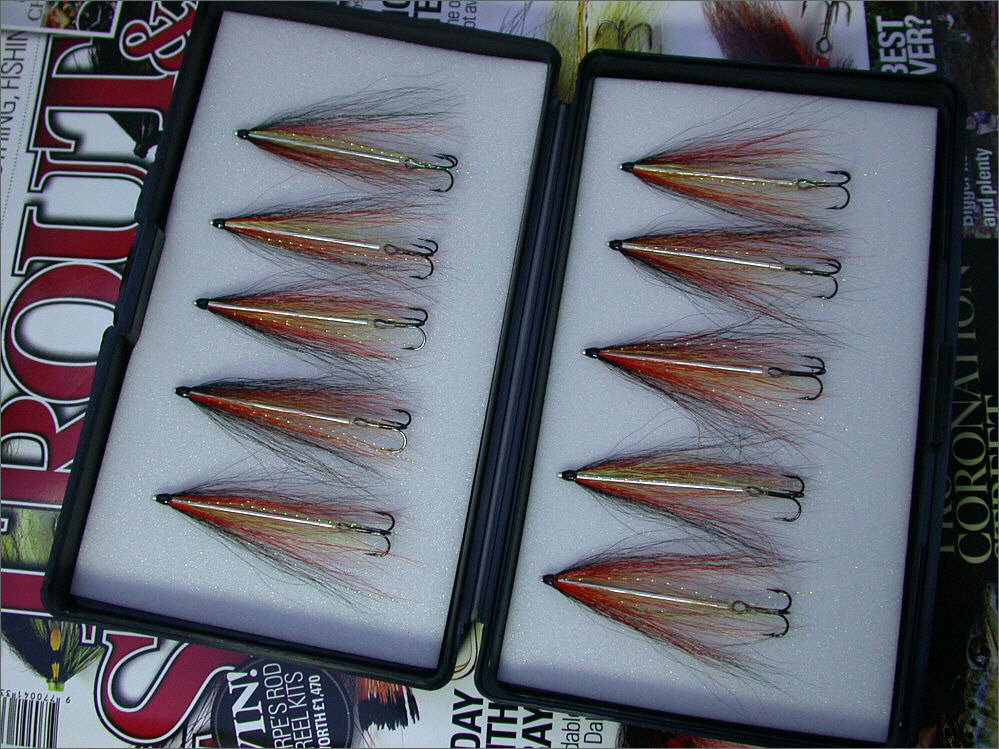
Also available for online
purchase is a boxed selection of
sea trout needle tube flies.
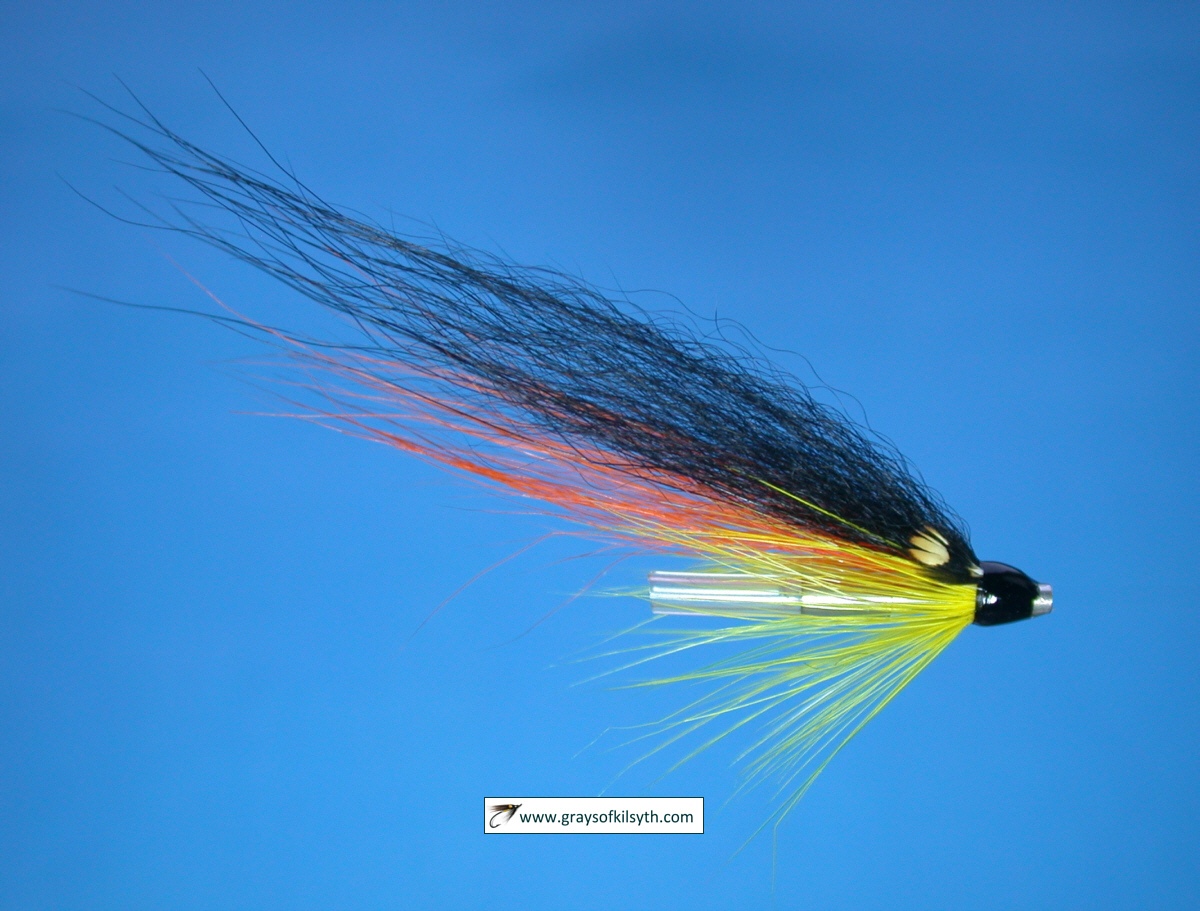
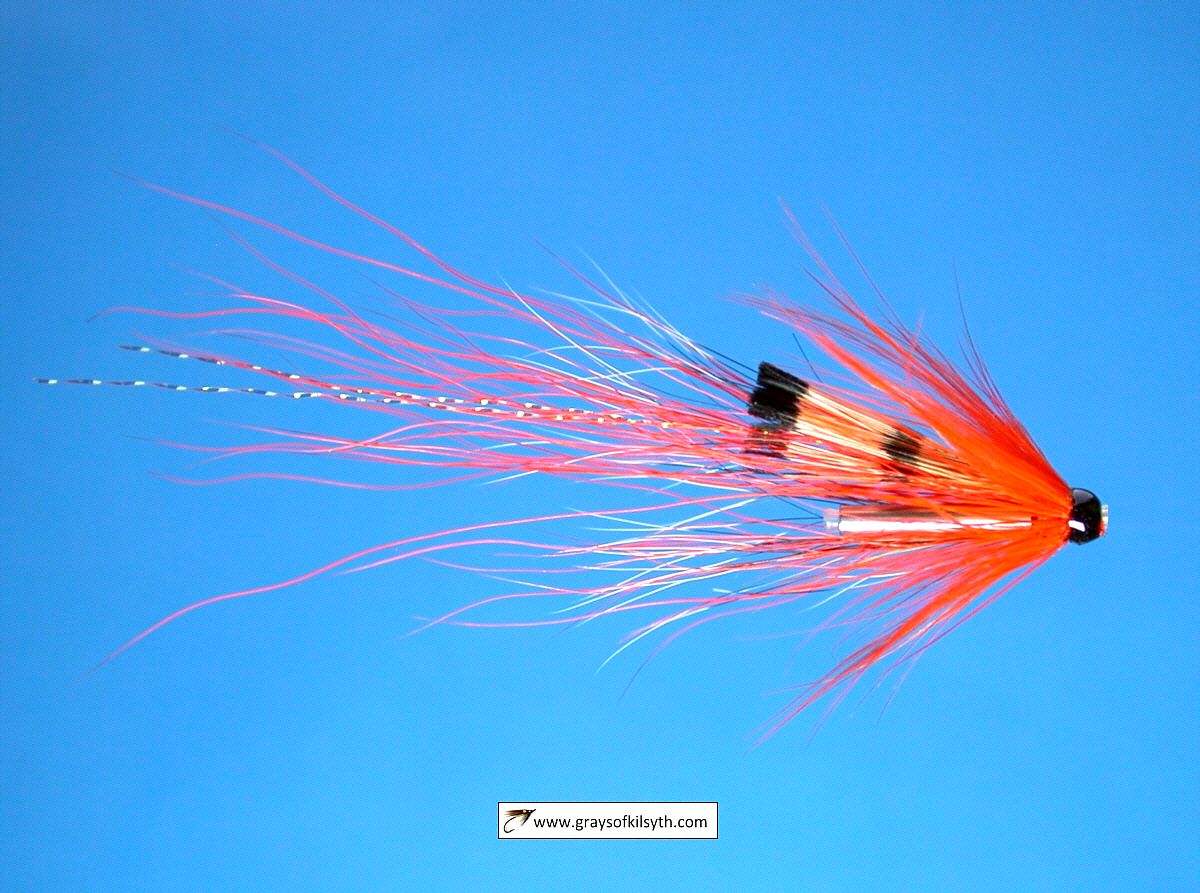
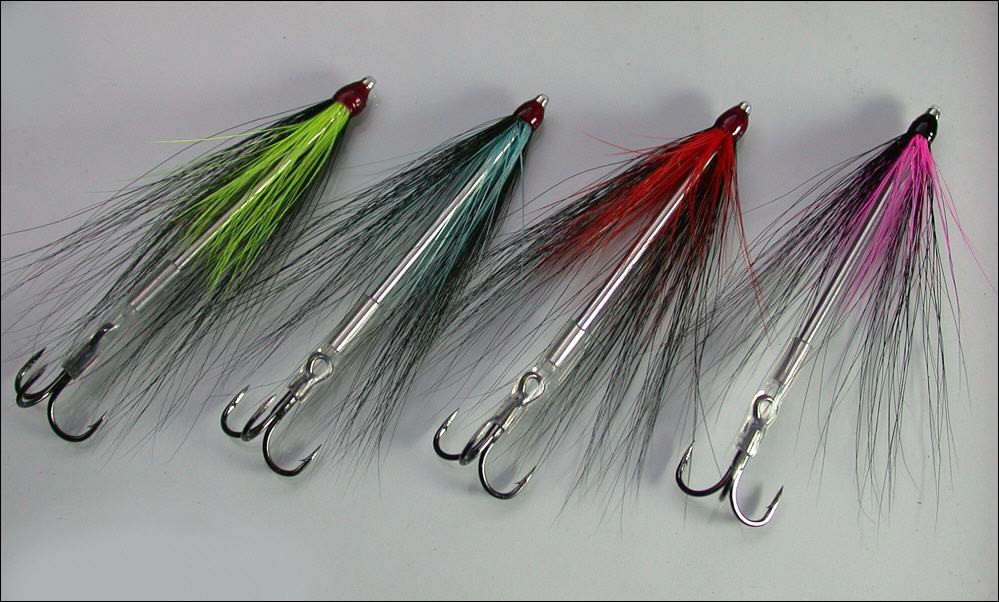
Some more
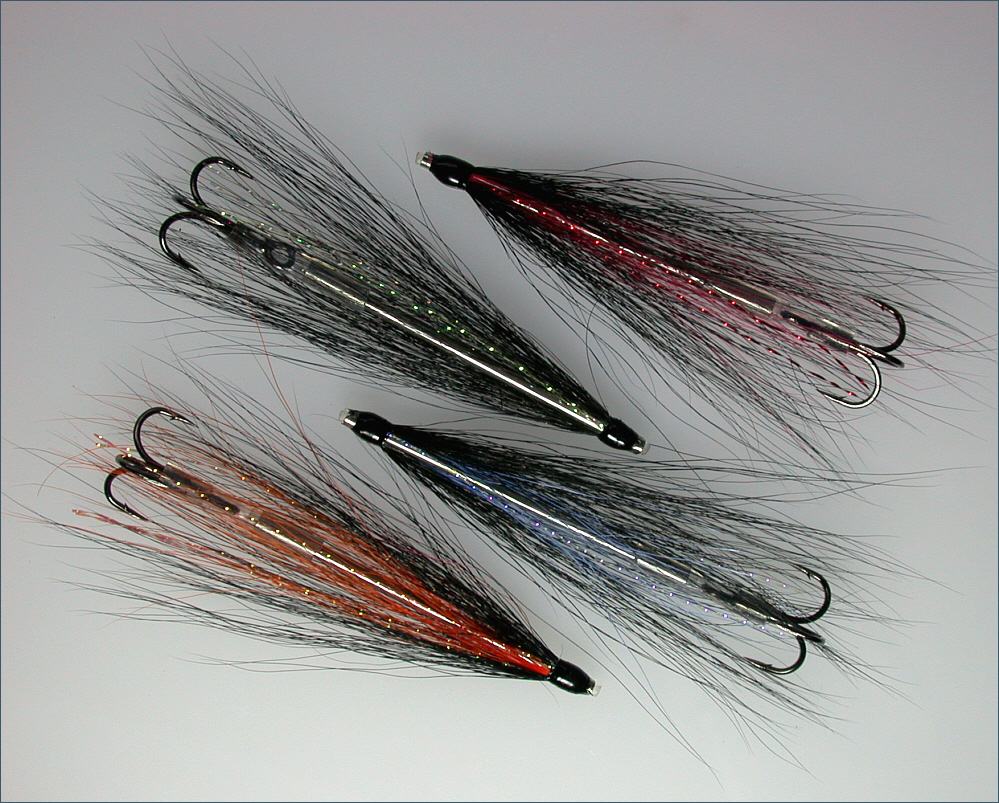
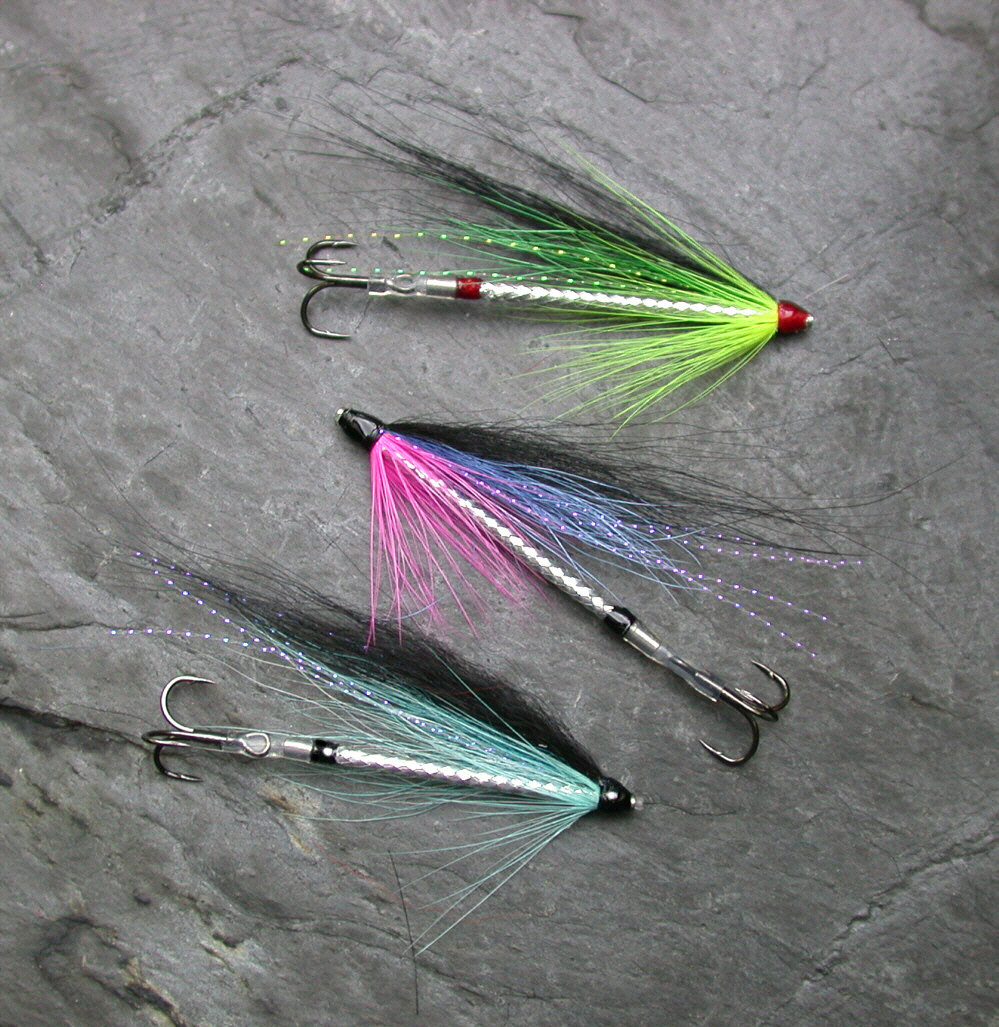
examples of tube flies dressed on Gray's Needle
Tubes are shown below. |
|
|
A Selection of
Traditional
Sea Trout Flies
Illustrated below is a
selection of sea trout flies for day and night fishing
on loch and river. Each sea trout fly has
established a reputation through many years of
trials by day and night on the banks of our sea
trout rivers. Each has earned its place in the
history of sea trout fishing.
Click on images to enlarge
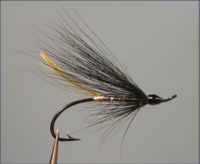
Silver Stoat
 |
|
Derived
from the Stoat's Tail salmon fly, this silver-bodied version
has become one of the most popular of all sea trout night
flies in use today throughout the British Isles. It is
fished on floating and sinking lines. It can be tied on
singles, doubles or trebles and as tube-flies, Waddingtons,
snakes or needles. In the larger sizes, the hair from a
squirrel's tail, dyed black, often replaces the hair of the
stoat. The plain black hackle may give way to brighter
colours of red, orange, yellow or blue, each fisherman with
his preferred variant. All are successful. A truly great sea
trout fly. |
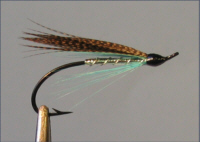
Medicine
 |
|
According to its creator, Hugh Falkus, the
Medicine "can be used all through the season on either floating
or sunk line, and is the best all-round sea trout fly I have
come across. A general purpose fly, it is good both at night in
clear water and during the day when the river is in spate and
coloured." In his experience, when sea trout were active at dusk
in fairly streamy water, there was nothing to beat it |
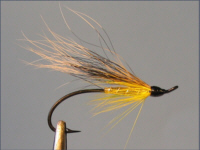
Golden Squirrel
 |
|
A good alternative to the
Medicine when a slightly lighter tone of fly is desired. The
hair from the tail of the grey squirrel, in its natural or dyed
form, has successfully replaced the feather wing in many of our
salmon and sea trout patterns. A commonly available material,
its merit lies in its versatility and durability.
|
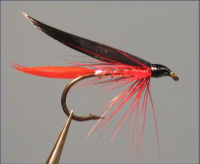
Bloody
Butcher
 |
|
The Butcher is said to have been invented by
Messrs Jewhurst and Moon, of Tunbridge Wells, Kent in the early
nineteenth century. Together with its near relatives, the Bloody
Butcher and the Kingfisher Butcher, it has been catching trout
and sea trout ever since. This pattern, with more red than the
standard butcher, is considered indispensable by many sea trout
fishers. It has become a sea trout classic. |
Alexandra
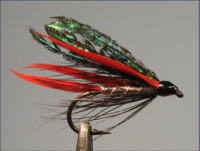 |
|
Introduced, under its old name, "Lady of the
Lake", around 1860, it was later re-named in honour of Princess
Alexandra. Some doubt remains over its creator. Some say W.G.
Turle of Newton Stacey, Stockbridge. Others, that it was devised
by Dr John Brunton, a well-known member of the Gresham Fishing
Society and inventor of Brunton's Fancy. So successful a fly was
it that it is reputed to have been banned on some waters. Still
a favourite with many sea trout men. |
Dark Mackerel
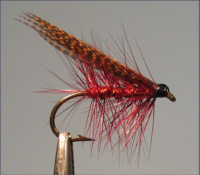 |
|
The Dark Mackerel was first
introduced, as a sea trout fly, by Messrs John Dickson, of
Frederick Street, Edinburgh, dressed on Martin outpoint hooks in
sizes 8 and 6. It is a most useful fly, both at night and, in
the daytime, for slightly dark, peaty waters. It also serves as
a useful bob fly on the loch. A good all rounder. |
Pheasant and Yellow
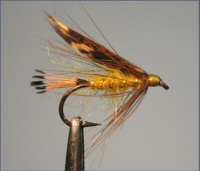 |
|
In his book "Sea Trout
Fishing", 1929, R.C. Bridgett, having gathered opinions from
sea trout fishers the length and breadth of Scotland,
compiled the following list of the ten most popular Scottish
sea trout flies: Butcher, Peter Ross, Teal and Silver,
Dunkeld, Mallard and Claret, Silver Doctor, Grouse and
Claret, Pheasant and Yellow, Blae and Blue,
Blae and Black. Even today, few sea trout fishers would feel
deprived if restricted to these ten flies. |
Mallard and Claret
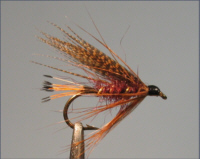 |
|
Generally attributed to William Murdoch, a
celebrated Aberdeen fisherman, the Mallard and Claret is
probably the oldest of the Mallard series of flies. In the words
of no less an authority than Courtney Williams, writing in 1948,
"For a general fly for any month of the year in fast rivers, for
lake fishing or for sea trout, there can be few more universally
popular flies. For sea trout, the Mallard and Claret is probably
the most popular of all wet patterns, whether fished in the day
or after dark." |
|
|
|
Boxed selections of traditional sea trout
flies and sea trout and salmon needle tube flies are available
online at
Grays of Kilsyth |
|
|
|